GEORGE - Portraits Of A Founding Father
George: Portraits Of A Founding Father
July 3 - Aug 9 (Opening July 3, 5pm - 7pm)
Cooley Gallery, Old Lyme CT, 06371
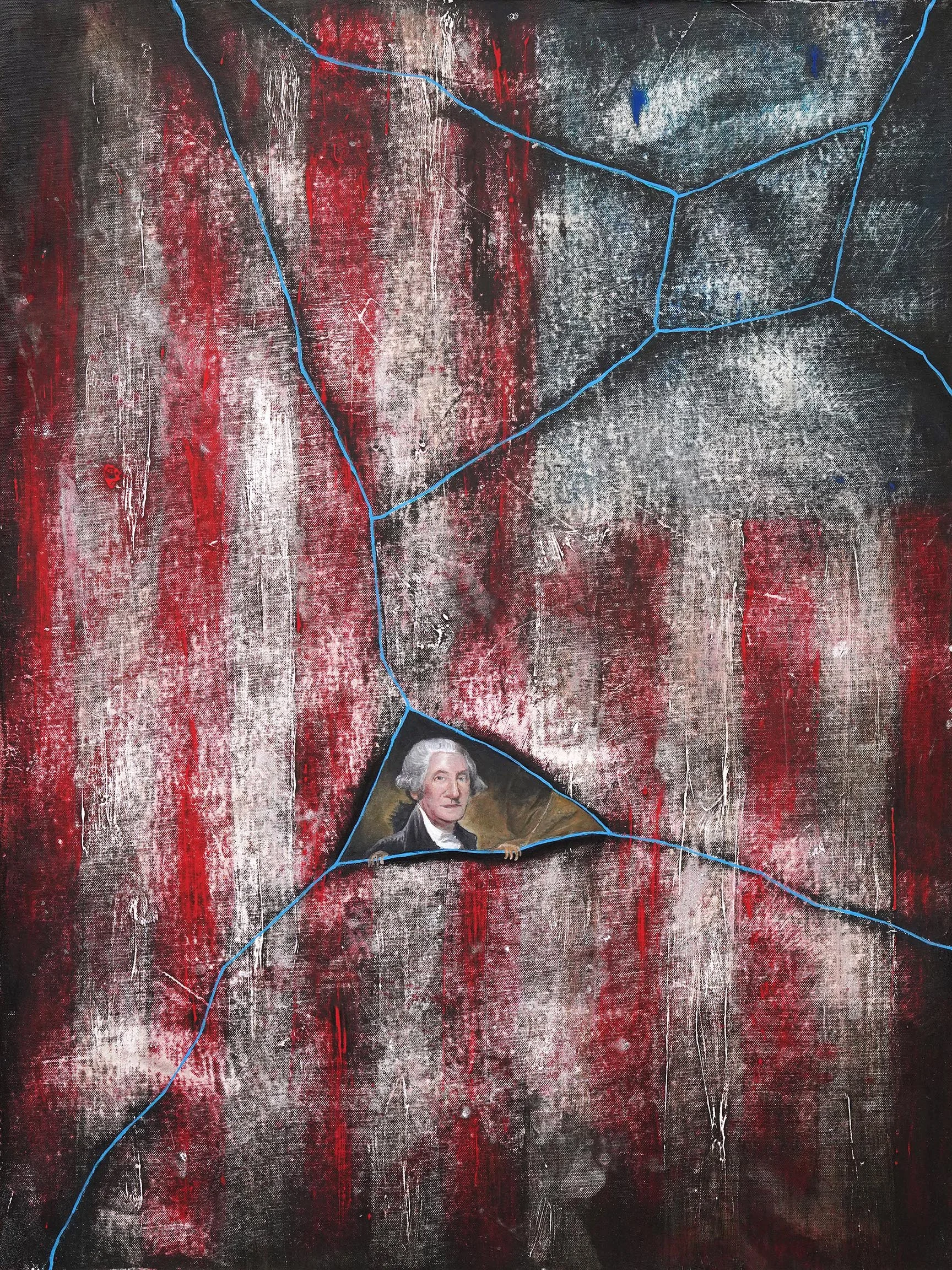
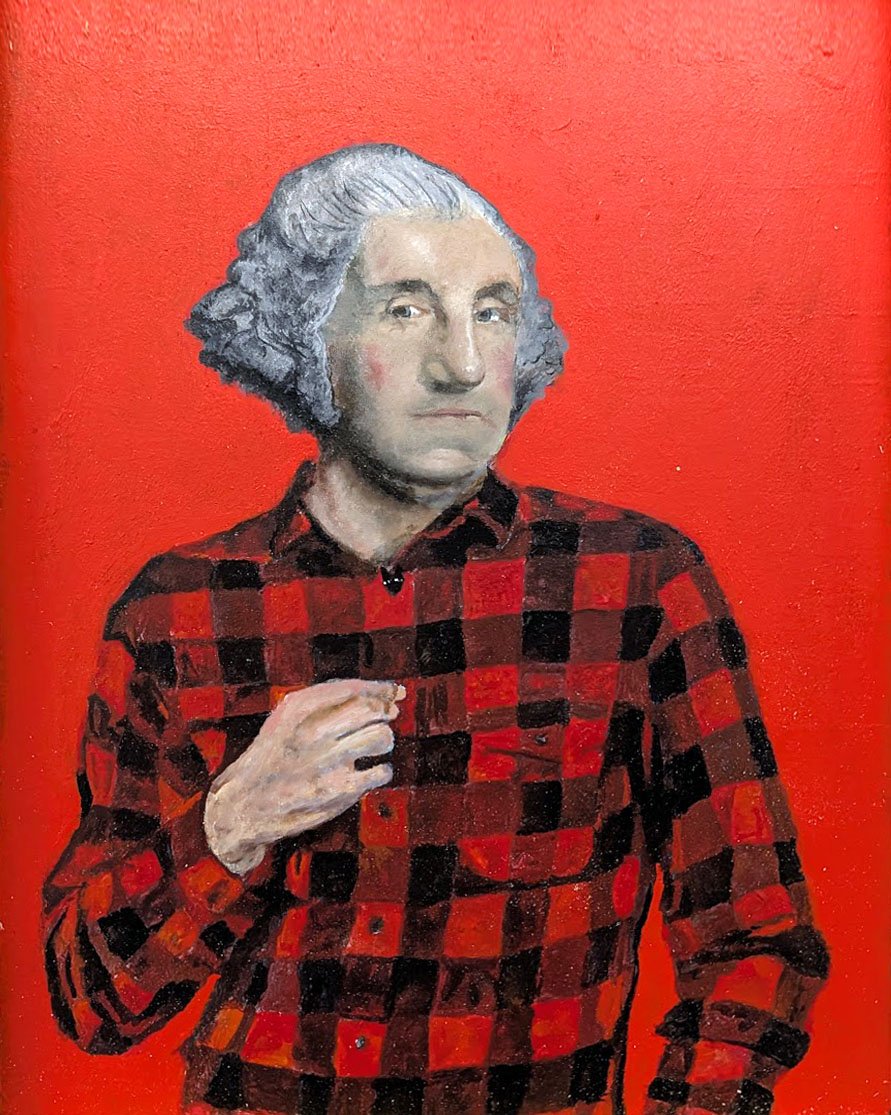
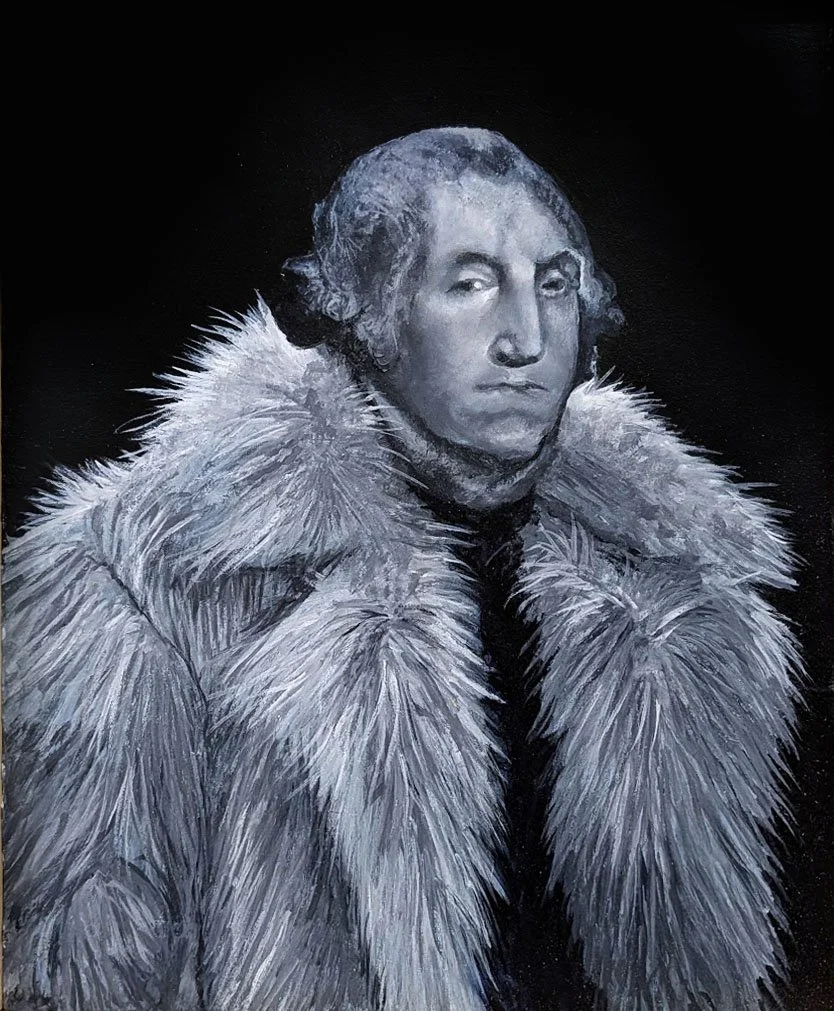
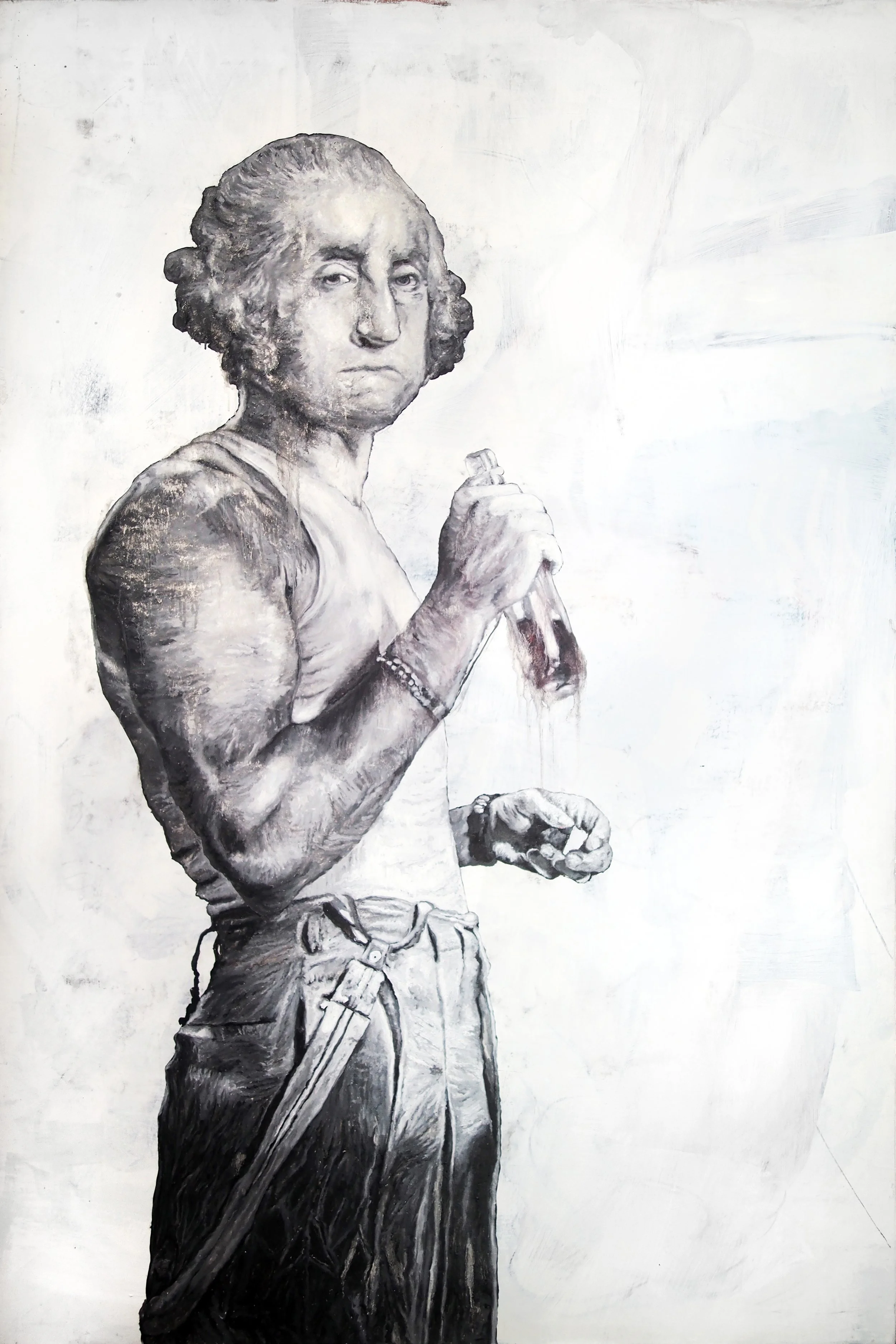
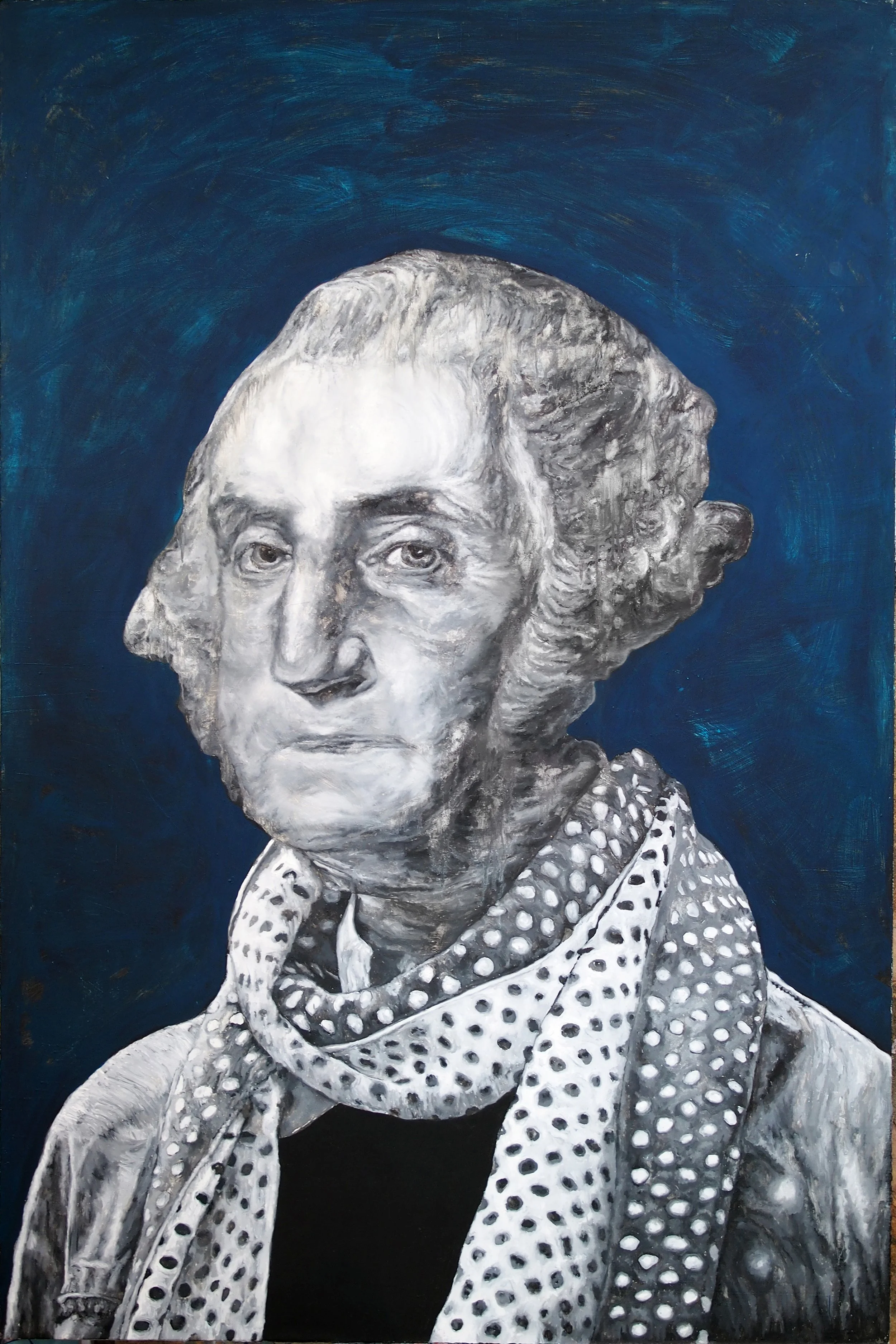
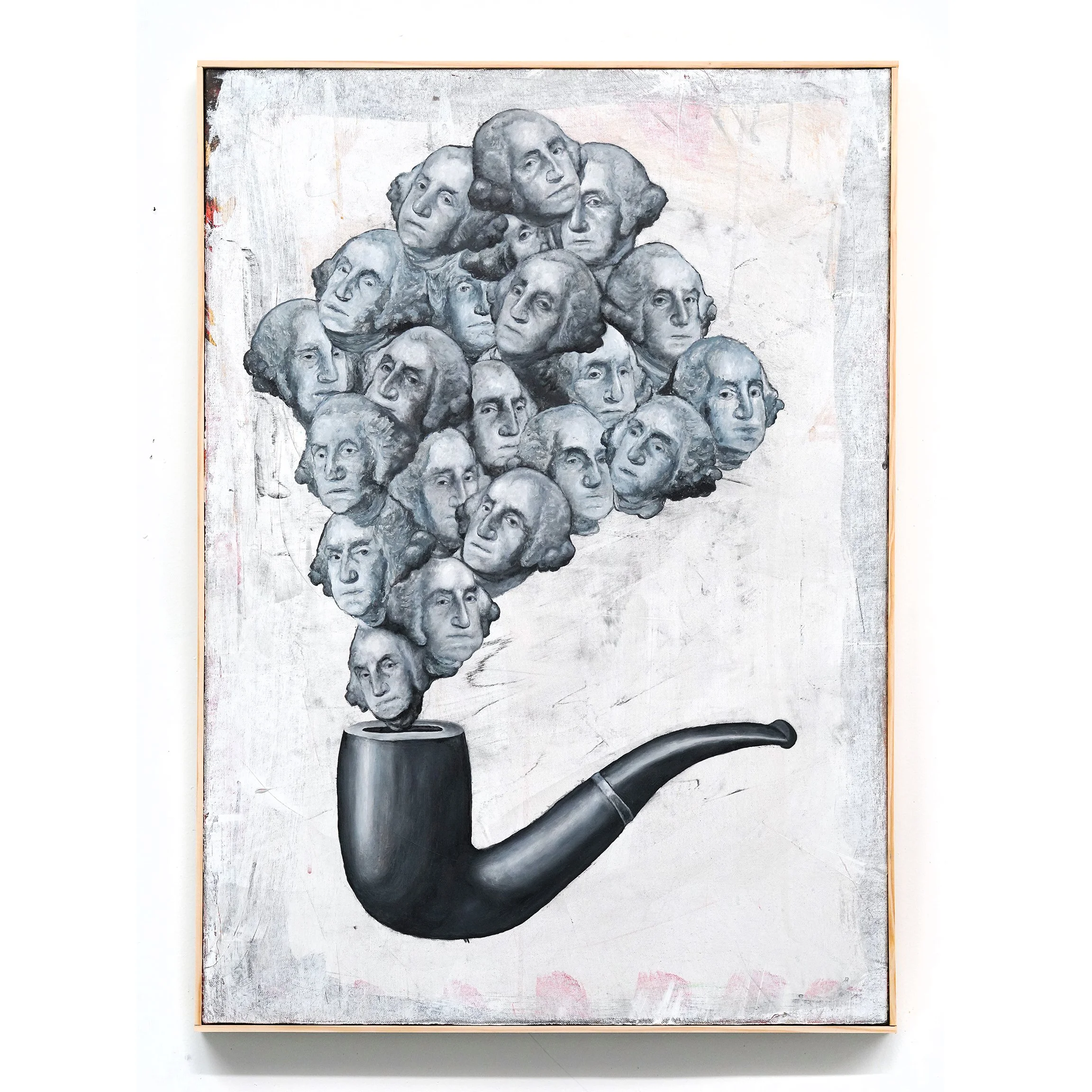
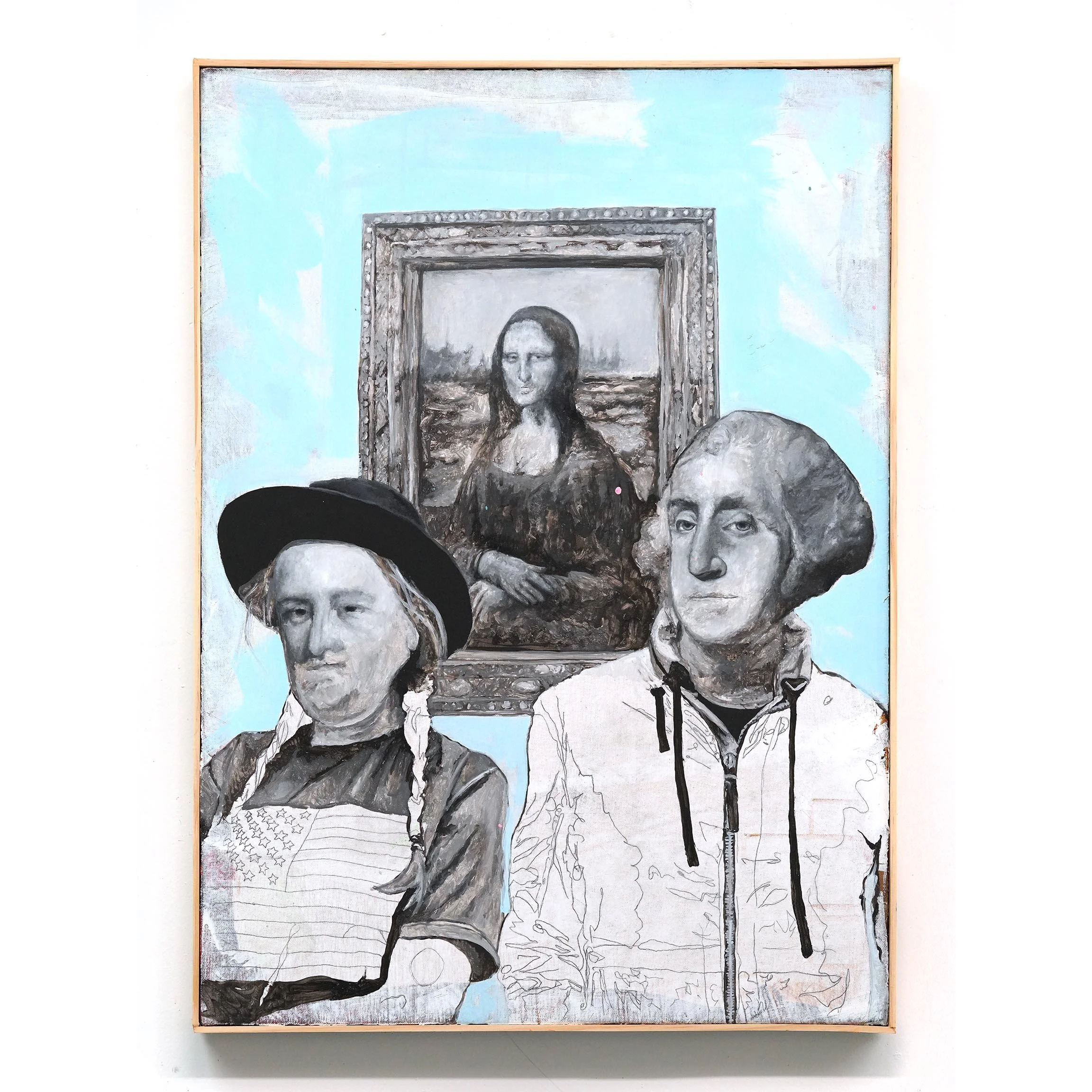
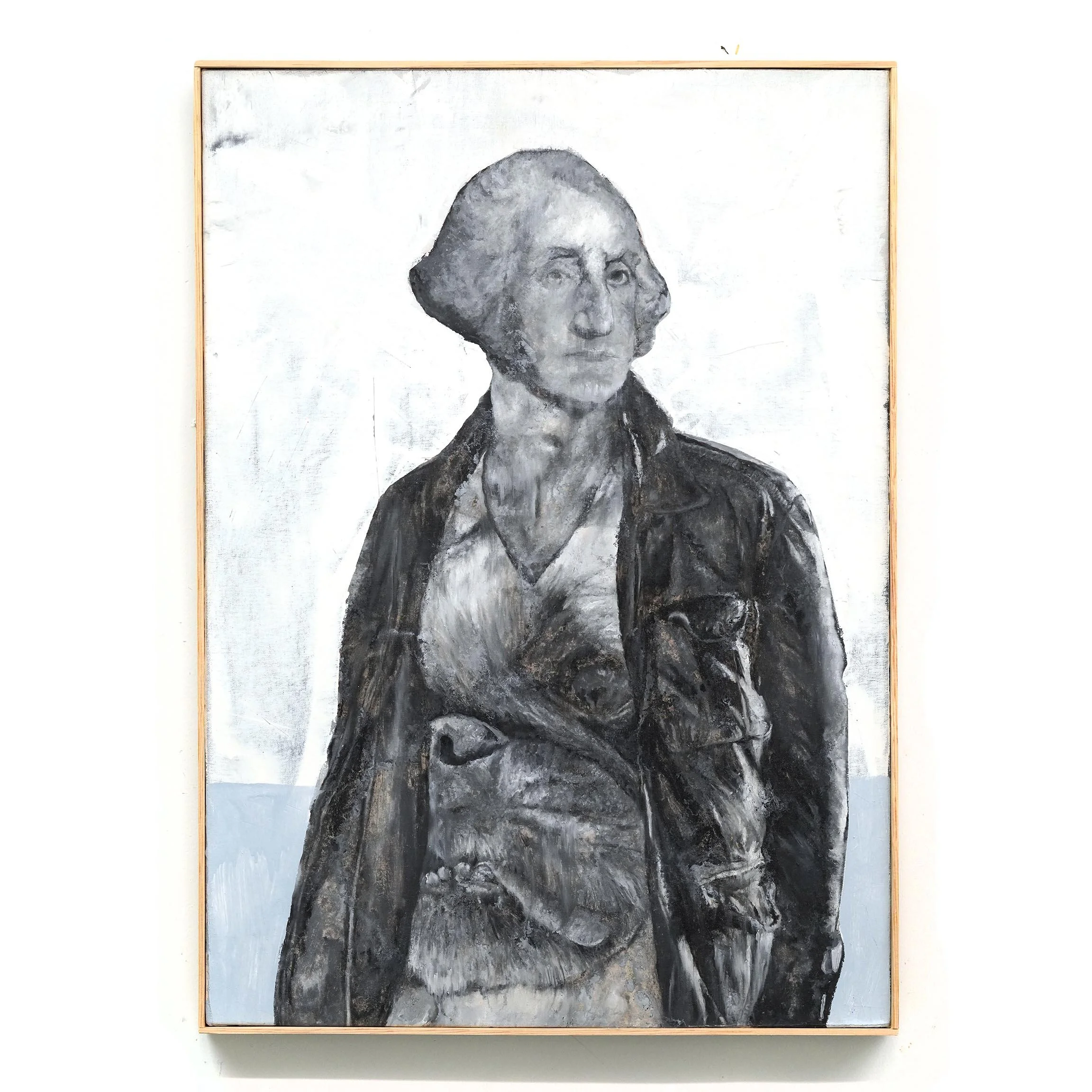
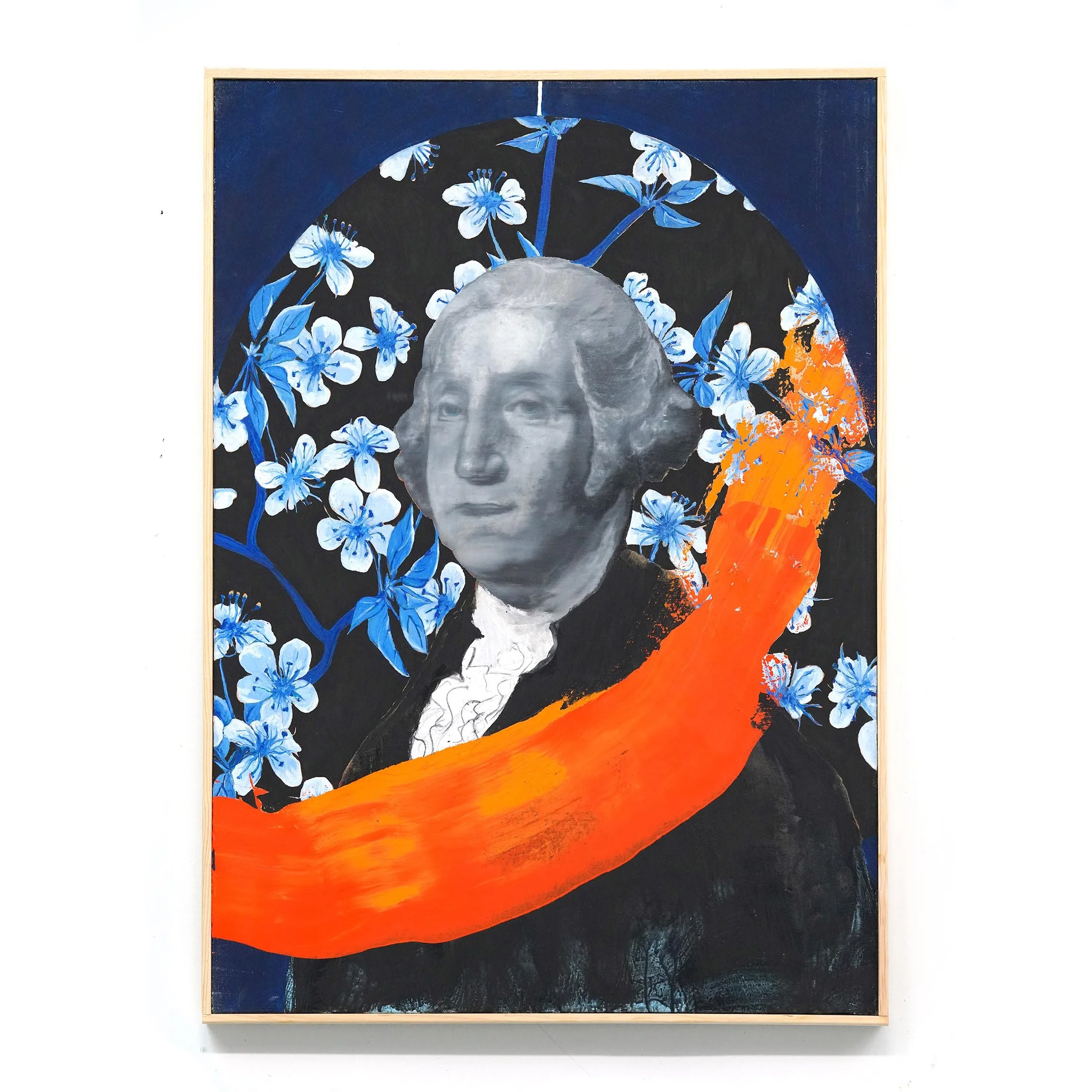
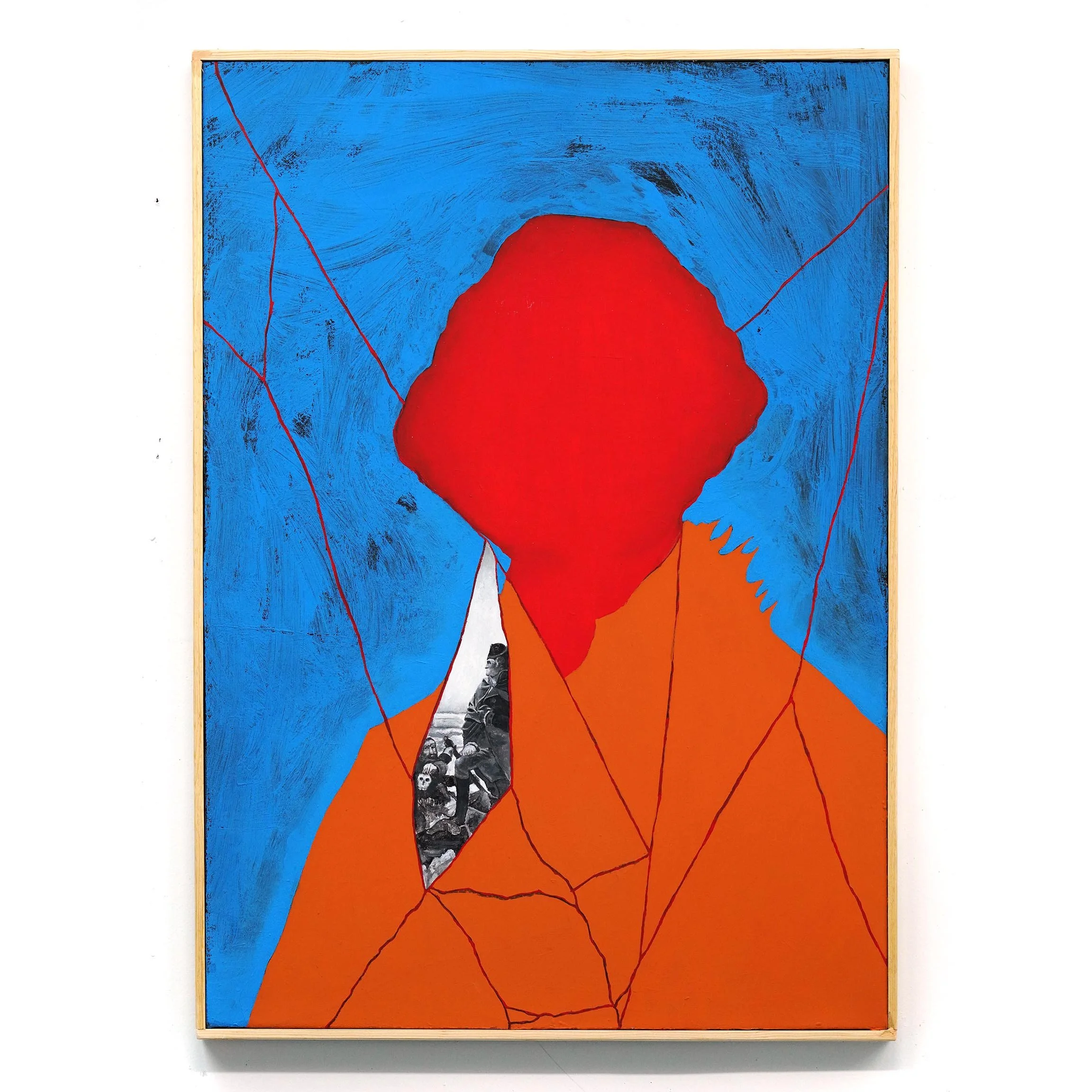
This exhibition of Lahav’s George series is featured at the Cooley Gallery in Old Lyme, Connecticut as part of the America 250 celebration. The exhibition brings together thirteen of the twenty one paintings made between 2018 and 2020, each centering on one of the most recognizable images in American history: George Washington.
Rather than treating Washington as a historical subject alone, the series uses him as a vehicle to think about painting itself, image making, fatherhood, mythology, and the ways visual culture shapes our understanding of history.
These works explore how images become symbols, how symbols become mythology, and how the layered language of paint can reveal the complexity hiding beneath even the most familiar faces.
SELECT WORKS
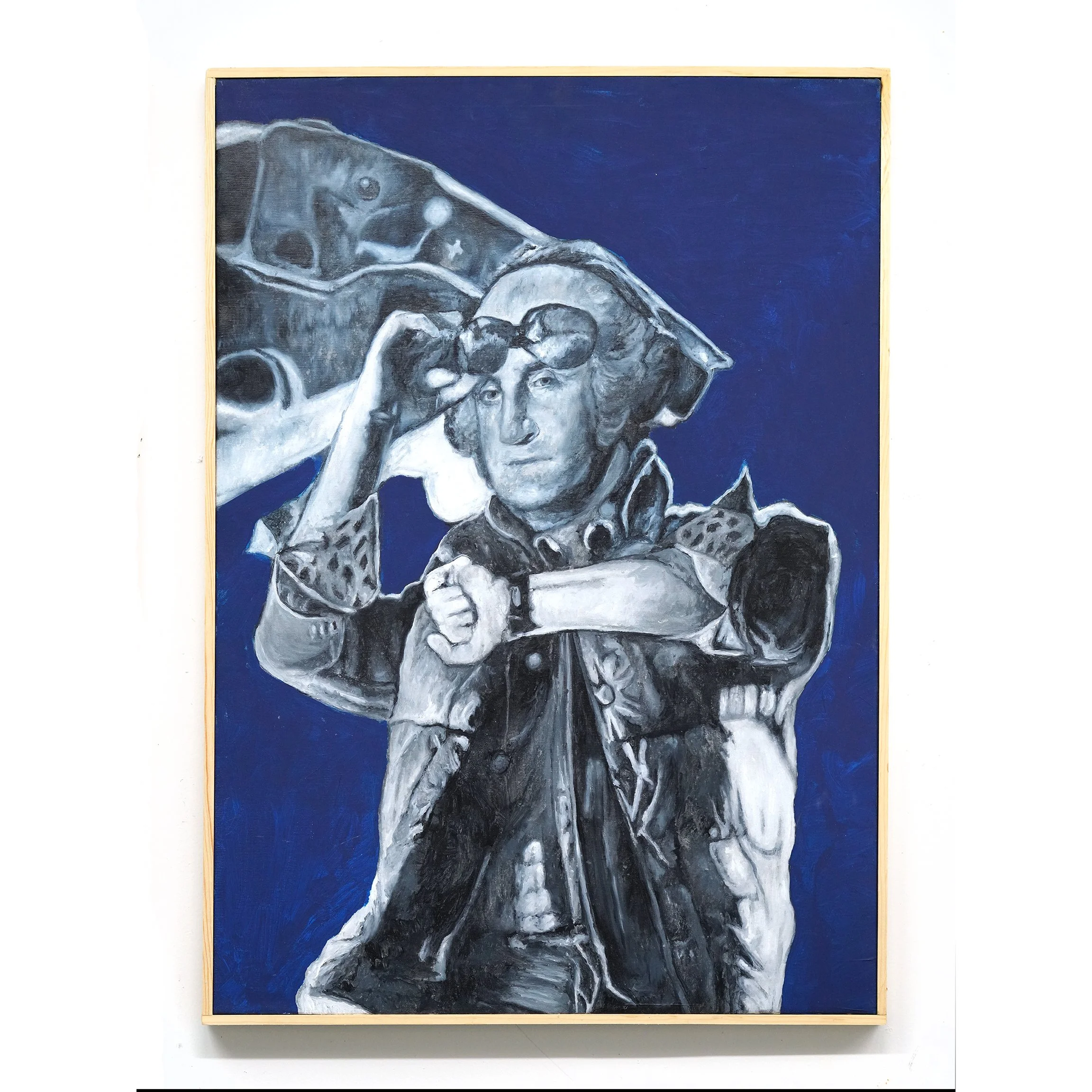
GEORGE
Essay by Jac Lahav : 2026
In 2009 I began painting a series of 30 large scale portraits of famous Americans. The Great Americans explored American culture, history, and how we understand "greatness." Over ten years later, in 2018, I dove deeper into one central figure from the series: George Washington. Roughly twenty one paintings were made in a two year period, each using Washington as a vehicle to think about painting and representation. Like much of my work, the George paintings collage history, personal experience, art history, and contemporary popular culture into novel visual narratives.
What drew me to George Washington was the phrase Founding Father.
In 2016 my wife and I had a baby. Parenthood changes you. It encompasses nearly every corner of one's thinking and physically transforms the brain, especially strengthening areas tied to empathy and social thinking. As a new parent, I began reflecting on my own history. My father died from emphysema when he was fifty five. In 2020, my mother began showing signs of Alzheimer's. These once omnipotent figures in my life were suddenly way too mortal and fallible.
Our relationship to our family changes as we ourselves grow. As such, the phrase Founding Father isn't just a seductively snazzy bit of sibilance but a deeper Freudian analogy to our iconographic American history.
As a child I saw my parents as mythic. As an adult, as I walk the same steps my own mother and father went through, raising a young child, I recognize their actions as complex and human, carrying both strengths and failures. (Note, every family structure is different. I know that well after years as a foster parent. Yet I think the analogy holds.)
The term Founding Fathers invites us to think about the nation's progenitors as both human and mythic.
Contemporary American history often presents Washington as either a flawless hero or an irredeemable villain. Washington held enslaved people. Native populations suffered enormously under the expansion of the United States. At the same time he fought for independence, helped shape a democratic experiment, and willingly gave up kingly power.
As I think of my own parents, through both love and abuse, I wonder how to celebrate accomplishments while honestly acknowledging negatives.
The images in the series George are challenging, the layers in these paintings both confirming and causing friction. These portraits are both political and pop. They are layered commentaries and surreal experiments. Often it is unclear where the line is drawn between conscious critique, absurd surrealism, and humor.
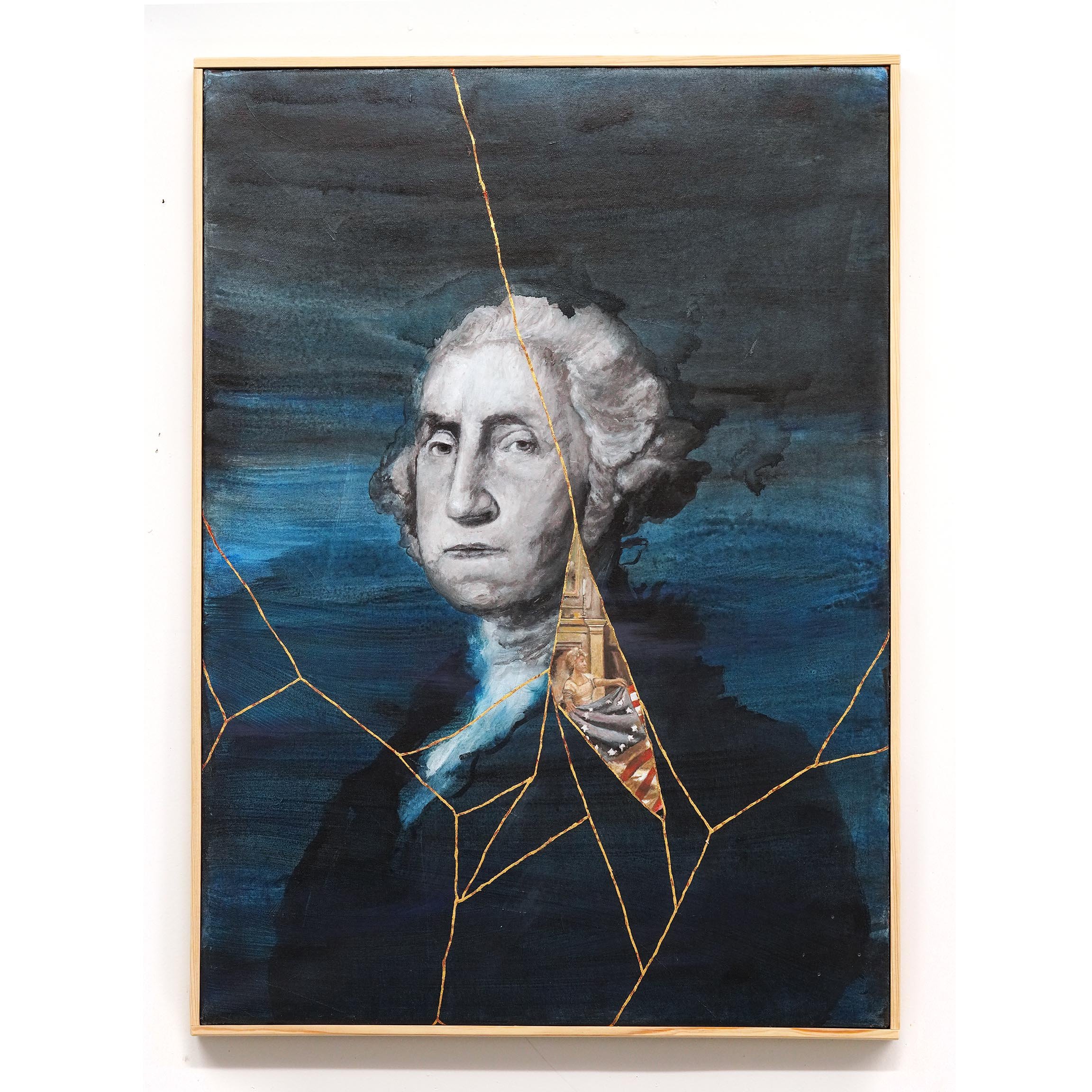
Many of the paintings contain whispered autobiographical elements. One portrait hides a tiny self portrait inside a giant Washington eye peeking out through a gold fracture inspired by Japanese Kintsugi pottery. The repaired crack speaks to emotions of brokenness, repair, and hope. Feelings synonymous with the country today.
These paintings are ultimately about looking inward, looking to the future, all the while meditating on the past.
Like most of my work, George describes the relationship between image and power. Andy Warhol claimed that image was power. George Washington is a Warholian fever dream, perhaps the most reproduced American of all time. To this end, I became fascinated by an unfinished Washington portrait by Gilbert Stuart called the Athenaeum Portrait, arguably the single most influential image in early American history.
Painted in 1796, Stuart deliberately left the portrait unfinished, realizing it was more valuable as a template for reproducing copies than as a completed commission. His studio created roughly seventy five versions from the Athenaeum, and its likeness became the Washington we envision, appearing in museums, textbooks, and ultimately on the one dollar bill.
Ironically, this super influential painting of American history was never completed, a touching allegory to the American experiment.
Washington himself disliked sitting for portraits yet understood their political necessity. Perhaps that's the reason for his frumpish scowl, or maybe his tightly pressed lips have a more logistical explanation, reflecting the discomfort of Washington's dentures. His teeth were not made from wood, as common knowledge claims, but a veritable torture device made from human teeth, animal teeth, ivory, and metal. Along with other politically fabricated stories like Washington cutting down the cherry tree, myths can reveal how propaganda replaces humanity.
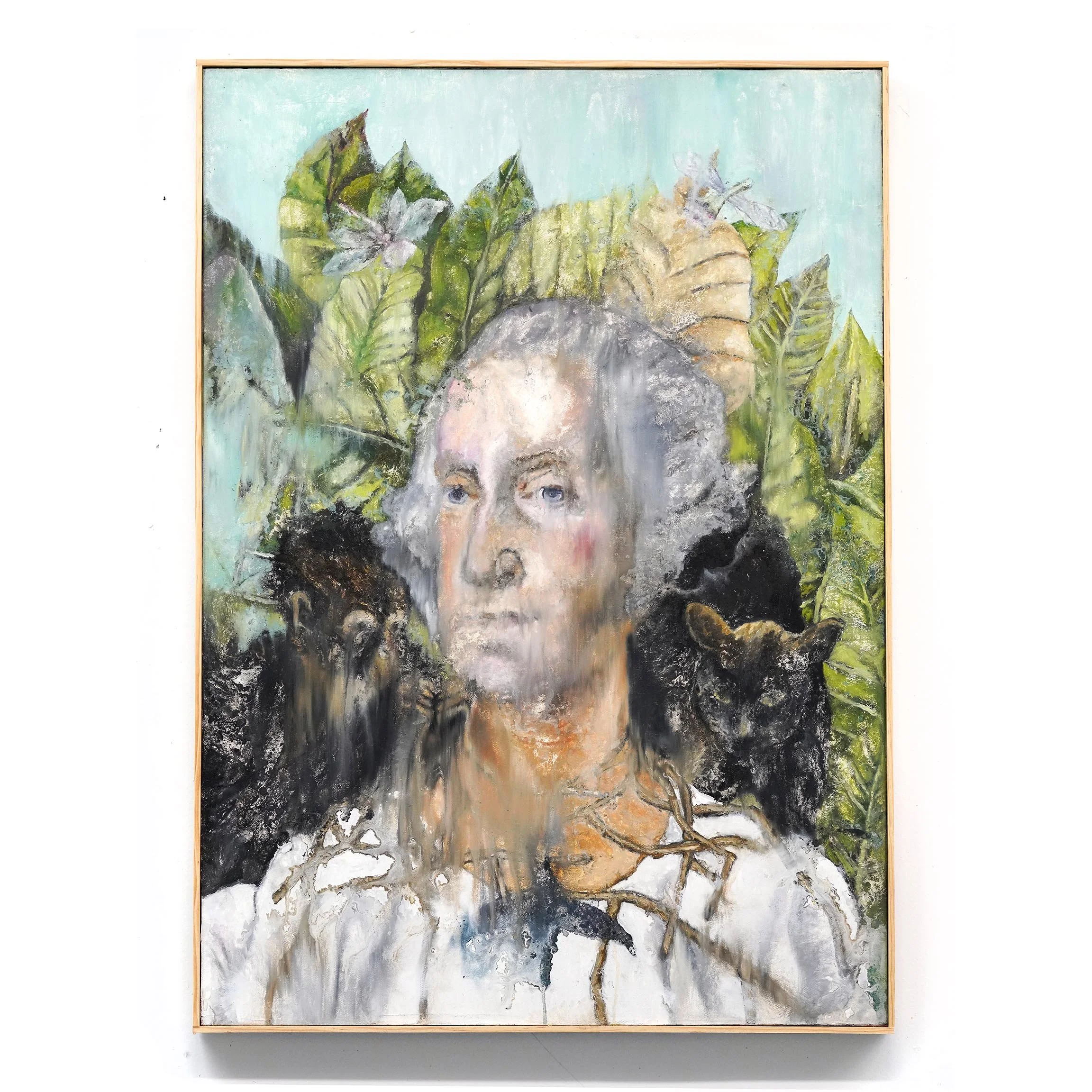
Interested in the slippage of fact and fabrication, I wonder how painted imagery both clarifies and obscures history. My Washington is cosplay. He is a constructed identity, a historical figure built through presentation, myth, and storytelling. Washington appears as a Frida Kahlo painting, as a Lumberjack, as Marty McFly from Back to the Future, anxiously looking at his watch. Pairing one of history's most recognizable figures with a film about time and changing the past.
To conflate image with painting is the cardinal sin of the contemporary painter. And so, this series begins to dissolve the representation, absolving Washington in the temple of abstraction. Washington himself gradually becomes patterned paint. Colonial decorative patterns consume one Athenaeum silhouette. Another painting begins with Washington's portrait split in half and mirrored until symmetry squishes Washington into an unsettling fractal. Another transforms Washington Crossing the Delaware into an almost entirely abstract field of repeated colonial ornament.
This last trope, inspired by Emanuel Leutze's famous Washington Crossing the Delaware, appears repeatedly throughout the series. In one painting the scene exists only inside a fractured opening within a larger reddish orange silhouette of Washington. In my version of history, a tiny self portrait quietly occupies the boat with some memento mori flair.
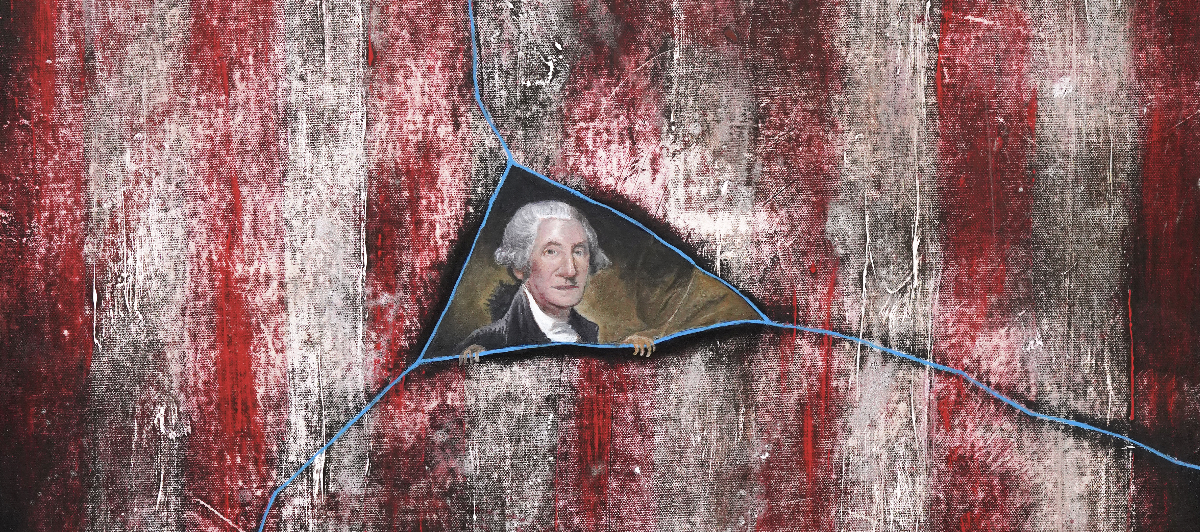
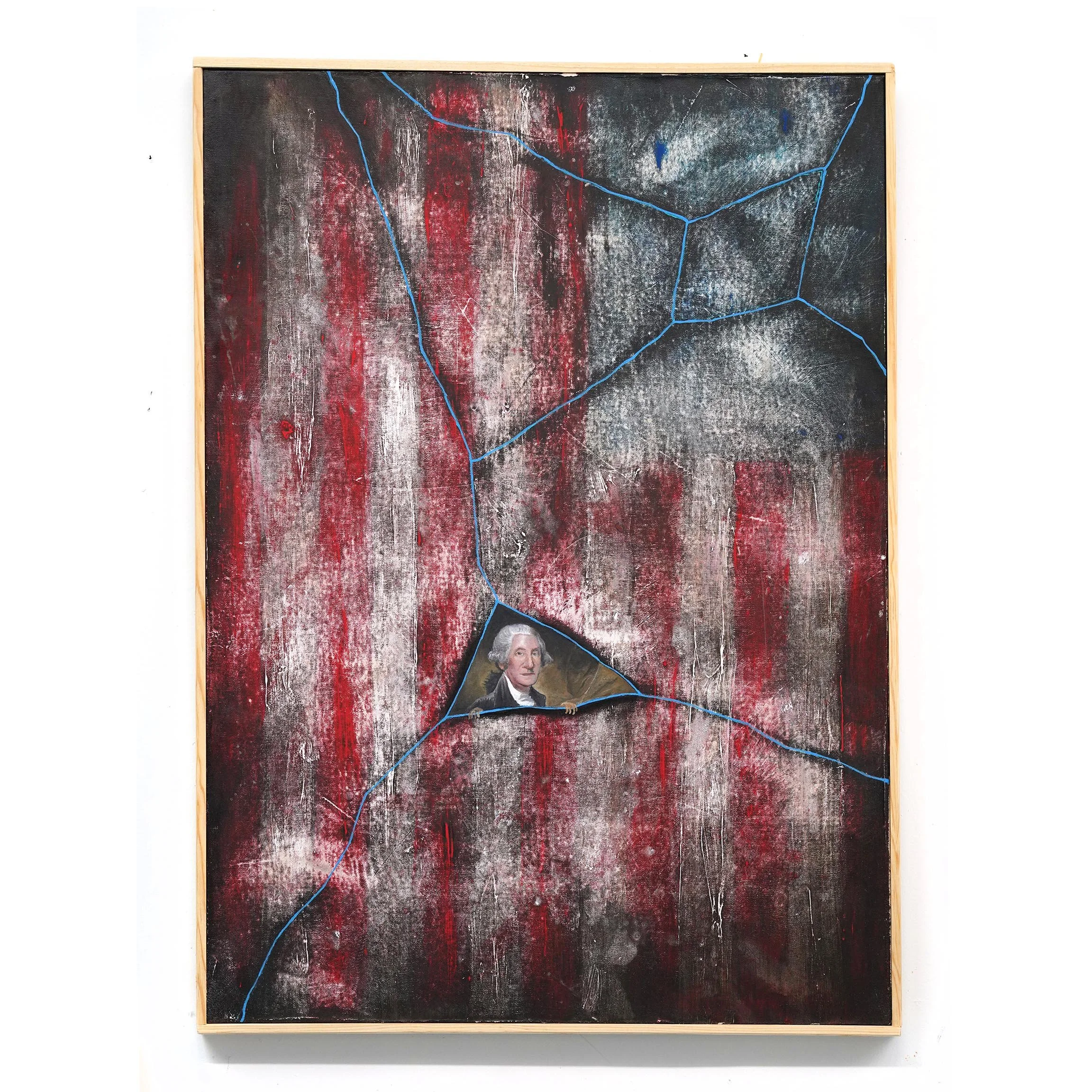
A formal abstraction is also seen in this series. Throughout these paintings broken surfaces repeatedly reveal other paintings layered beneath them. An aging American flag cracks open to expose a tiny Washington humorously peeking out. A darker recreation of the Athenaeum Portrait fractures to reveal Betsy Ross sewing the American flag. History continuously folds into art history, which folds into painting itself.
Eventually, four larger works expand George back toward monument. One returns to a broken Kintsugi motif. As mentioned before, my own self portrait looks back from inside Washington's eye, recalling the layered reflections found in Van Dyck's Arnolfini portraits while thinking back to the Founding Fathers conundrum. Another large Washington places the Athenaeum head on the body of Marlon Brando from A Streetcar Named Desire. Is he holding a bottle of Coca Cola or a bottle of liquor? Is this the American dream we were promised? The one we aspire to? Or is it simply the America we have?
Ultimately these paintings are less about George Washington than about the painted construction of historical memory itself. They question how paintings shape belief, how myths replace people, and how images gain authority through repetition.
Perhaps that realization is also why I stopped painting George Washington in 2020.
The project began just before the pandemic, continuing through the George Floyd protests, the quarantines, and the Trumpification of media politics. By the end of the series I found myself asking a different question.
Why am I adding yet another image of George Washington into the world?
The investigation had run its course. I am less interested in birthing another Washington image, and like a parent, more interested in what these paintings might become once they leave me.