JEWISH MUSEUM MILWAUKEE : MARCH 6 - SEPT 6 2026

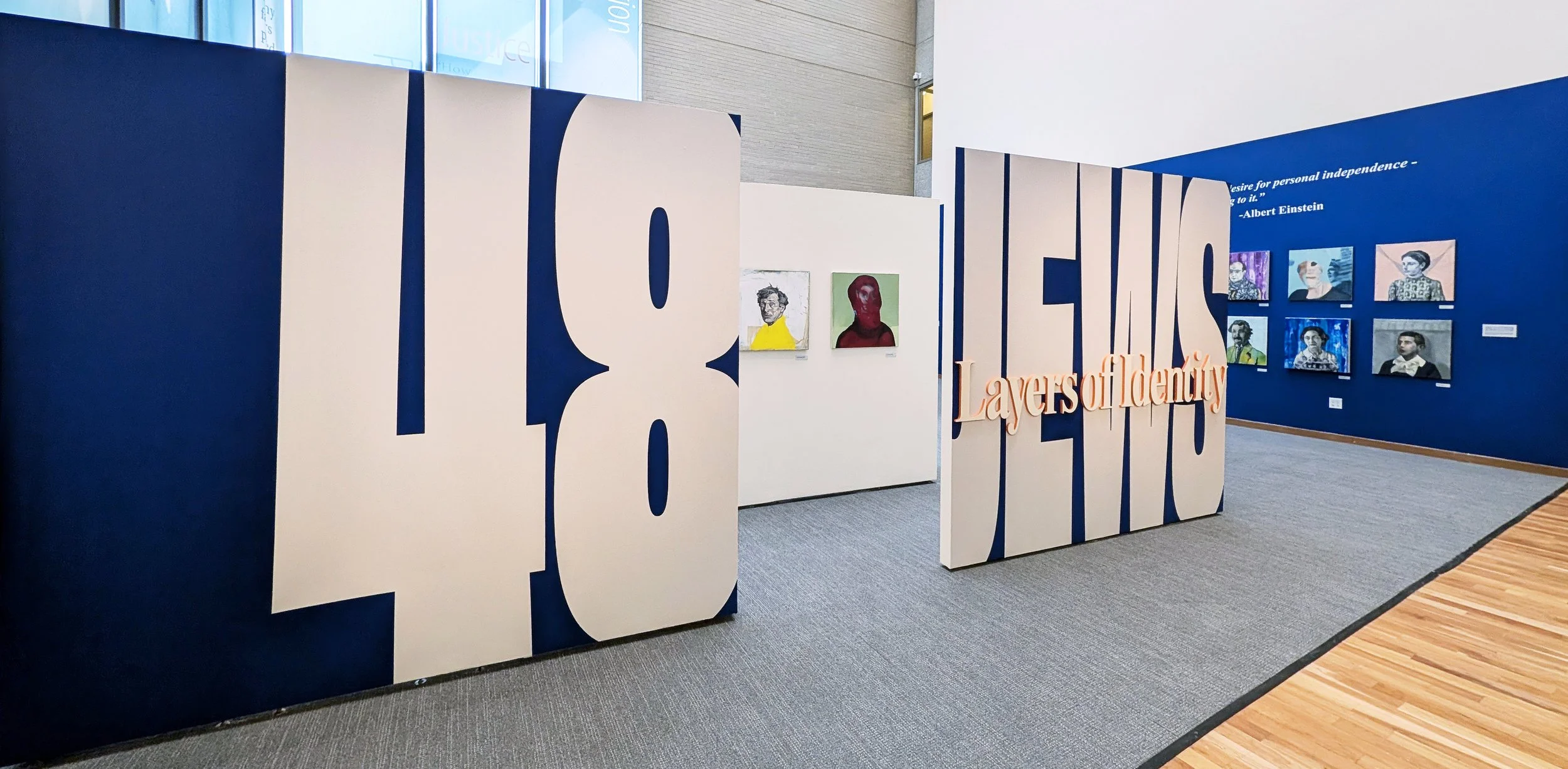
48 JEWS : LAYERS OF IDENTITY
MILWAUKEE JEWISH MUSEUM: MARCH 6 - SEPTEMBER 6, 2026

The series 48 Jews began in 2006 with what seemed like a simple exercise. Artist Jac Lahav was talking with a friend and they began trying to list famous Jews. The list stalled almost immediately. The only reference that came to mind was the Adam Sandler Hanukkah song, a comedic roll call of Jewish celebrities. The moment was revealing. If a humorous pop culture song had become a shorthand for Jewish identity, then something deeper was happening beneath the surface.
Lahav turned to the internet.
At the time, early Google searches and Wikipedia entries felt authoritative, almost encyclopedic. Typing questions like “famous Jews” produced lists that appeared definitive. But as Lahav began researching, the answers quickly became complicated. Who counts as Jewish? Who decides? Is Jewish identity determined by religion, ancestry, cultural participation, genetics, history, or public perception?
What began as a simple search evolved into a long running artistic investigation into identity.
The title 48 Jews references the German painter Gerhard Richter’s 1972 series 48 Portraits, which depicted influential Western thinkers in a grid of stark black and white paintings. Richter’s work presents a seemingly objective canon of intellectual history, dominated by white European men. Lahav adopted the structure but deliberately destabilized it. Unlike Richter’s fixed set of portraits, Lahav’s series is intentionally open ended. The number forty eight functions more as a conceptual framework than a literal count. Over the years the list has expanded, shifted, and evolved as new figures are added and reconsidered.
In this way, the series mirrors the instability of identity itself.
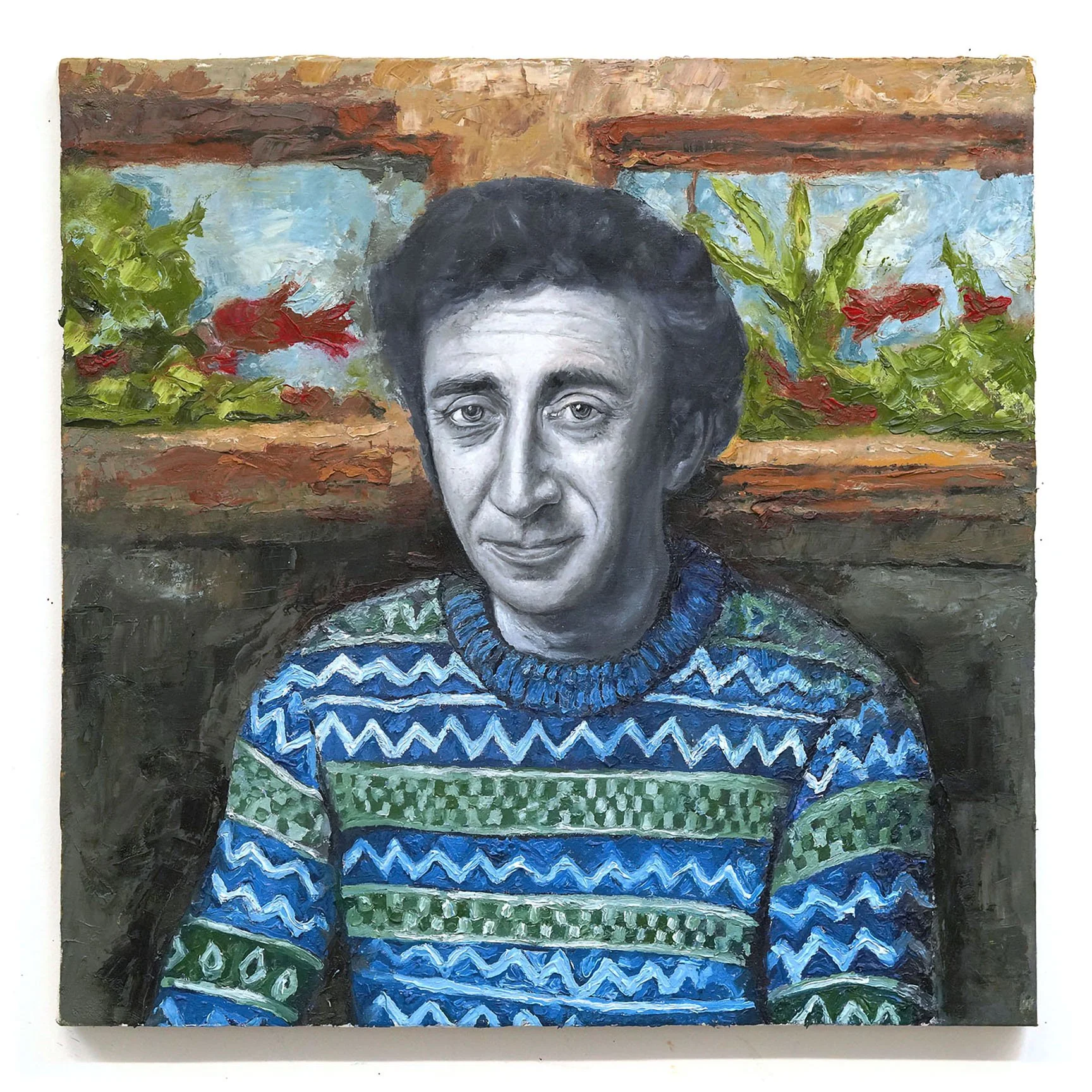
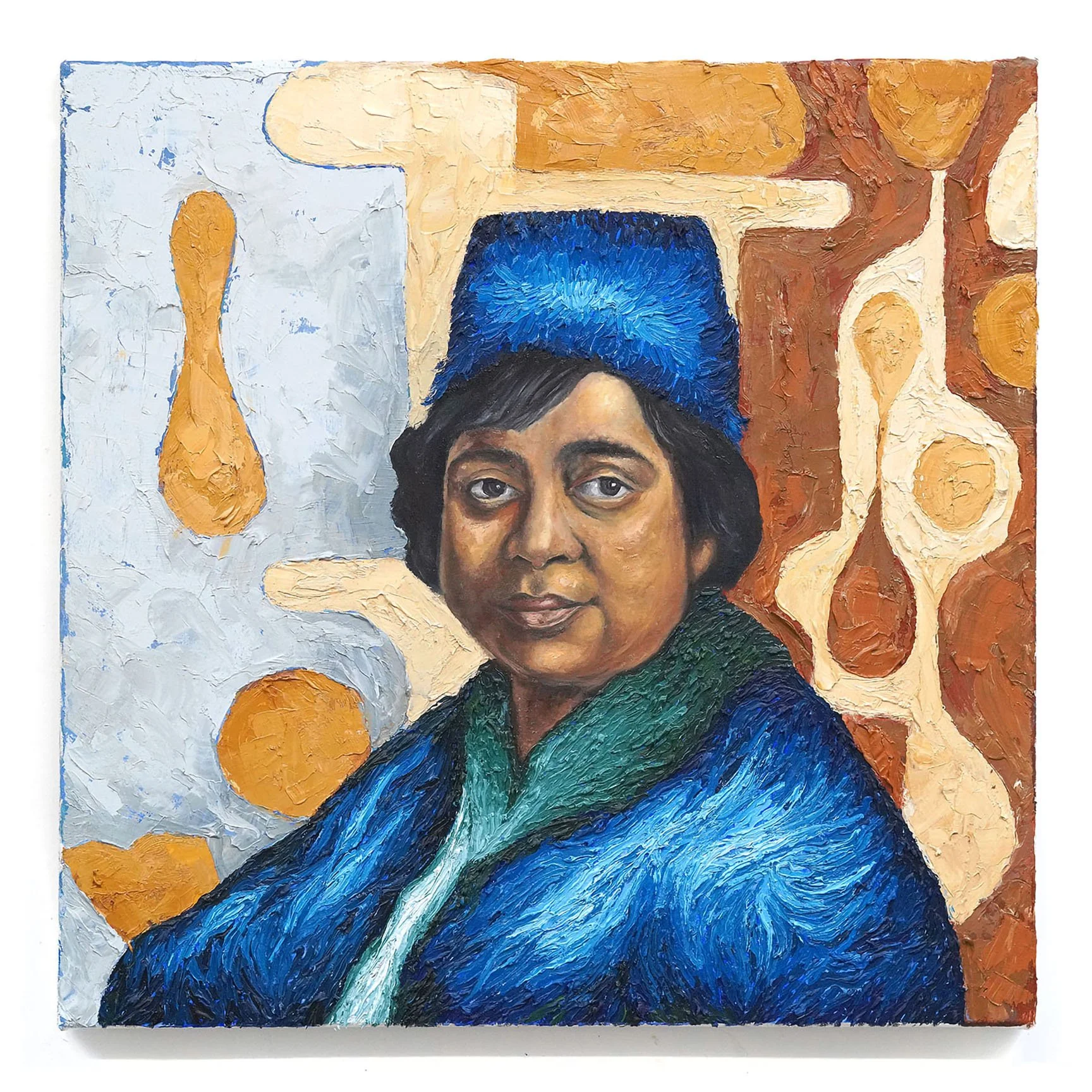
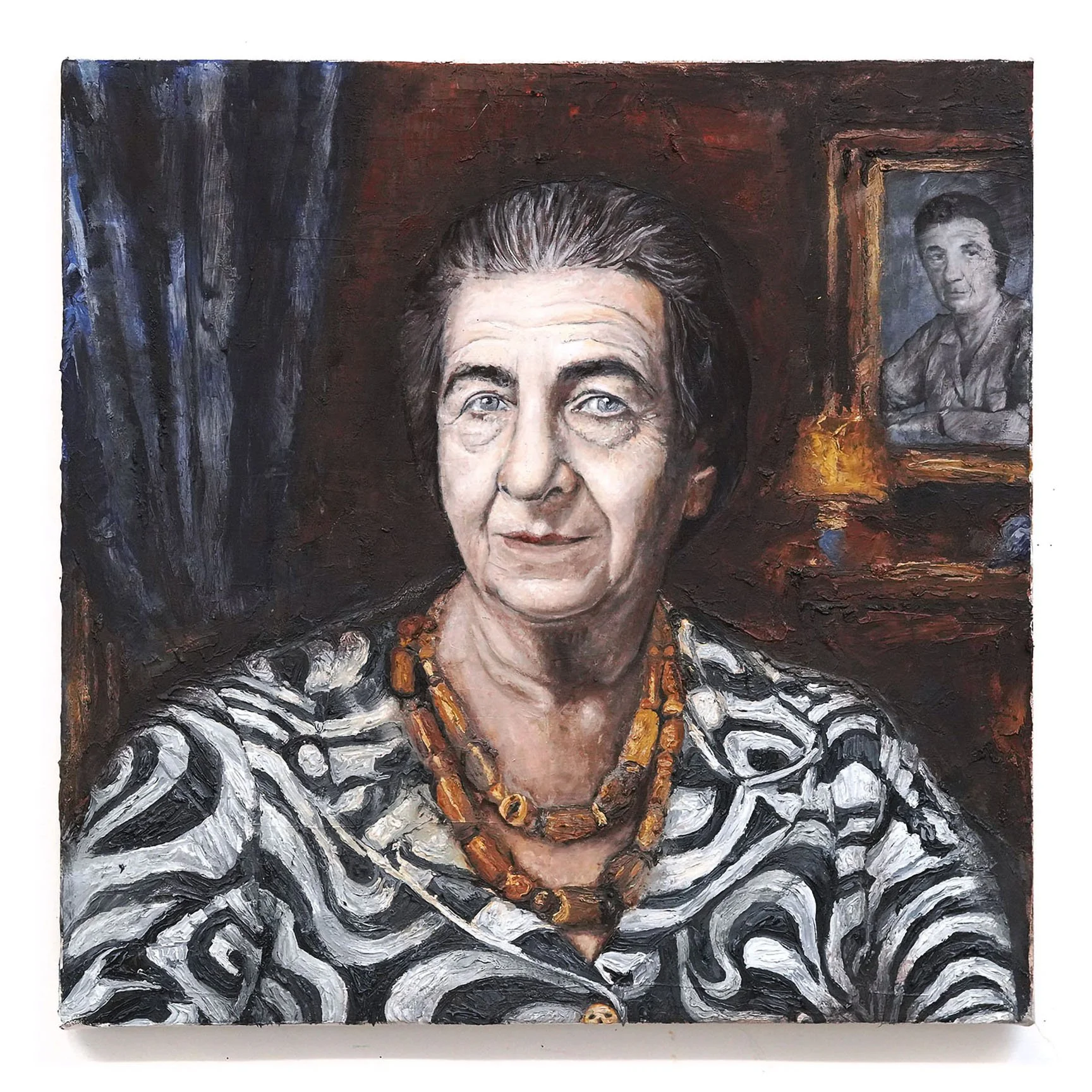
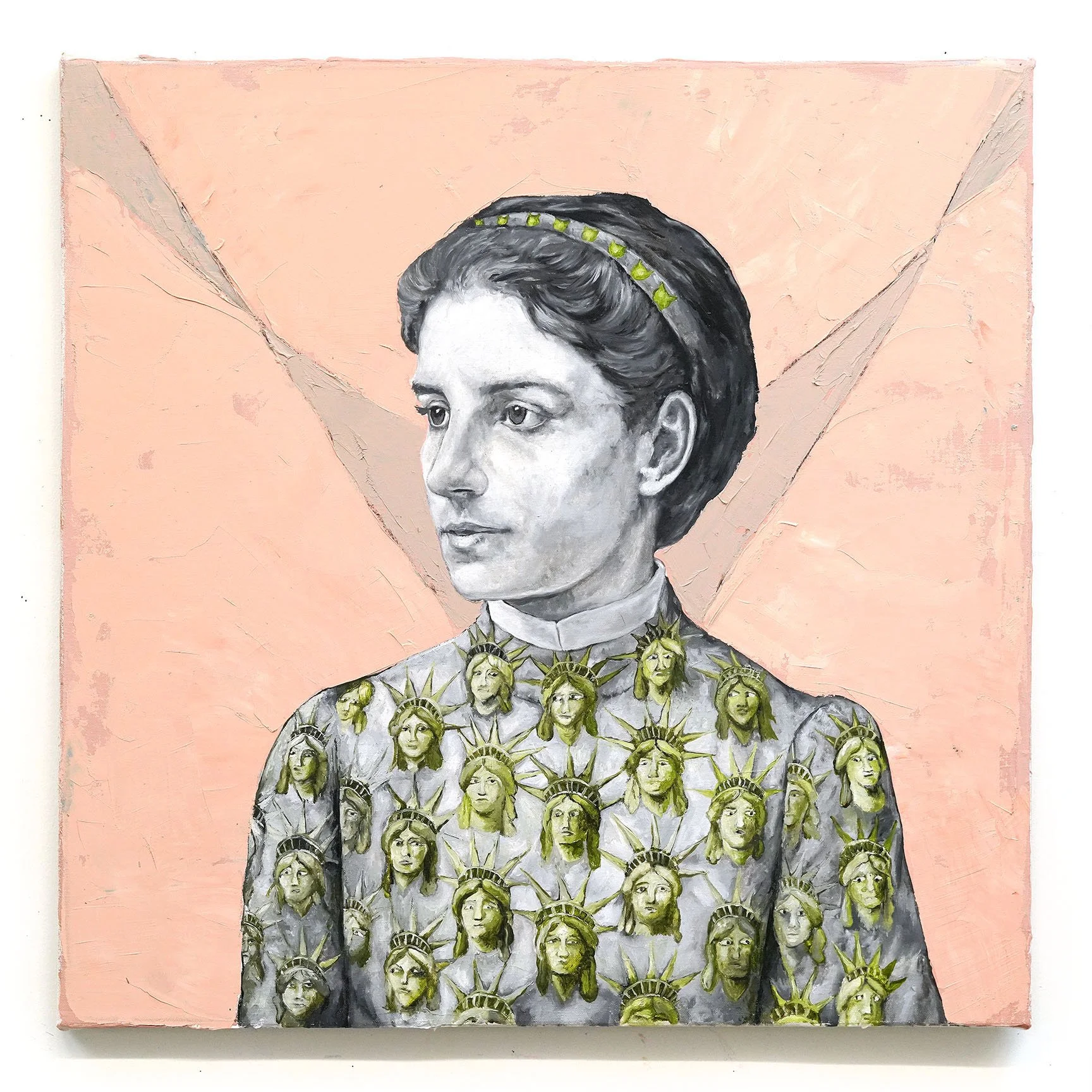
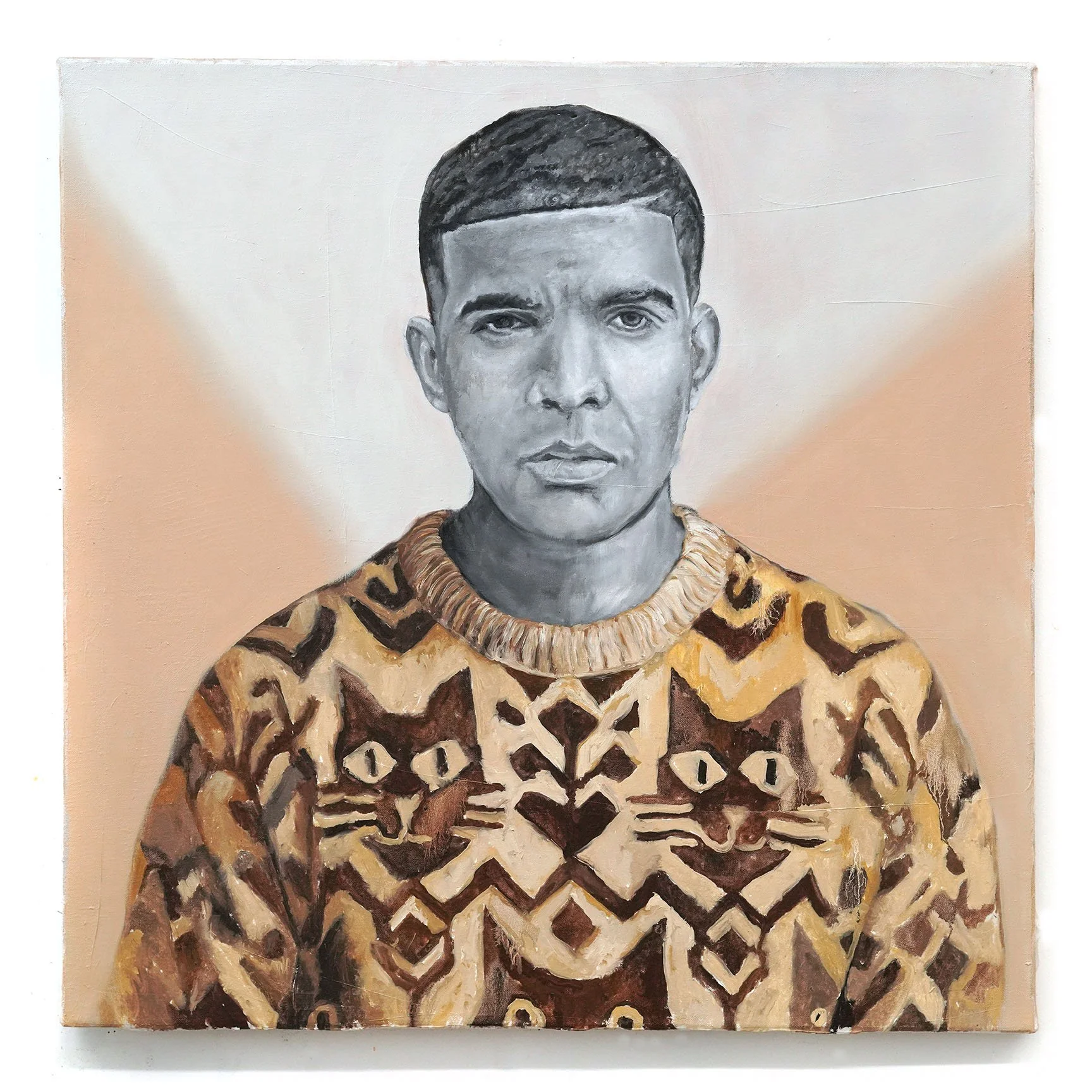
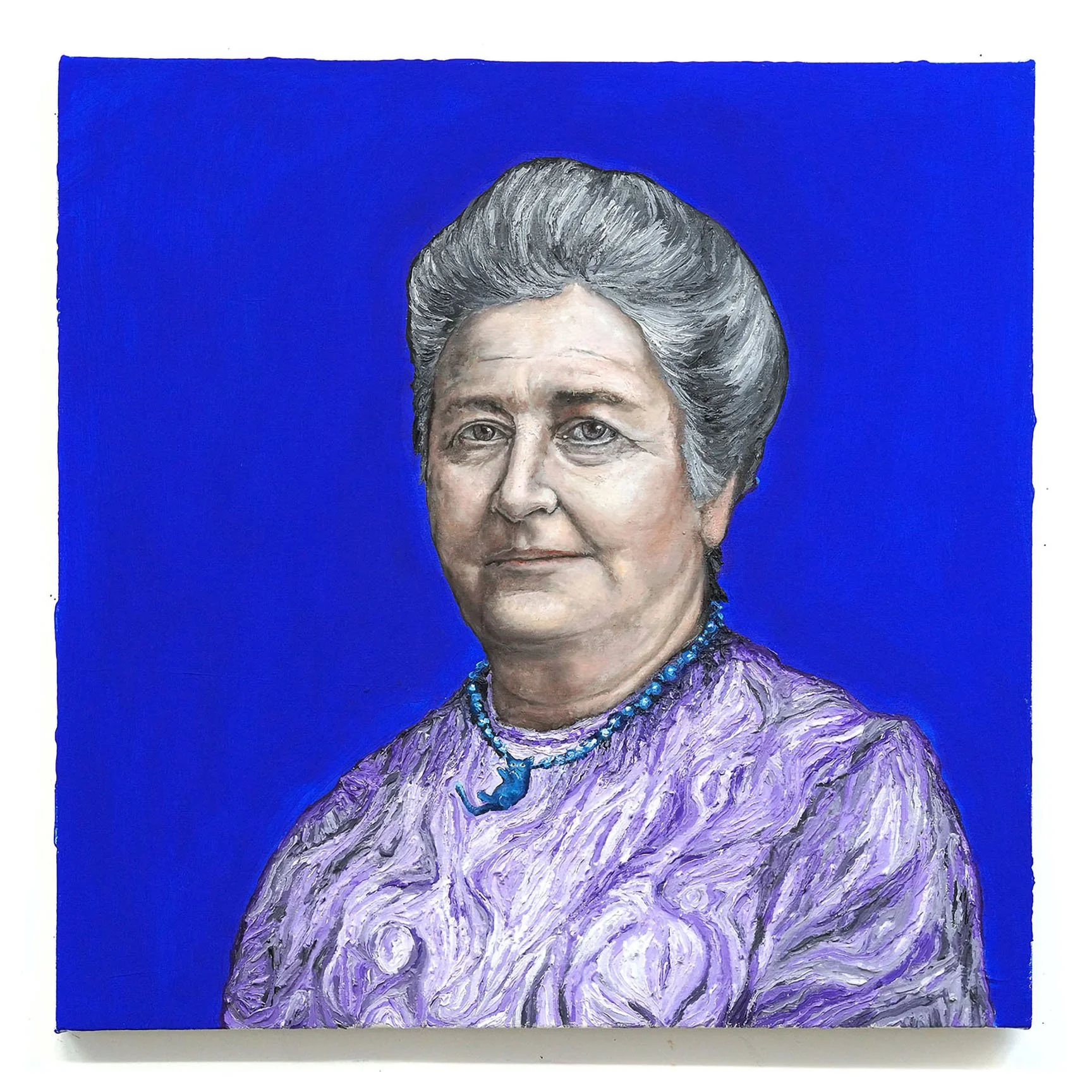
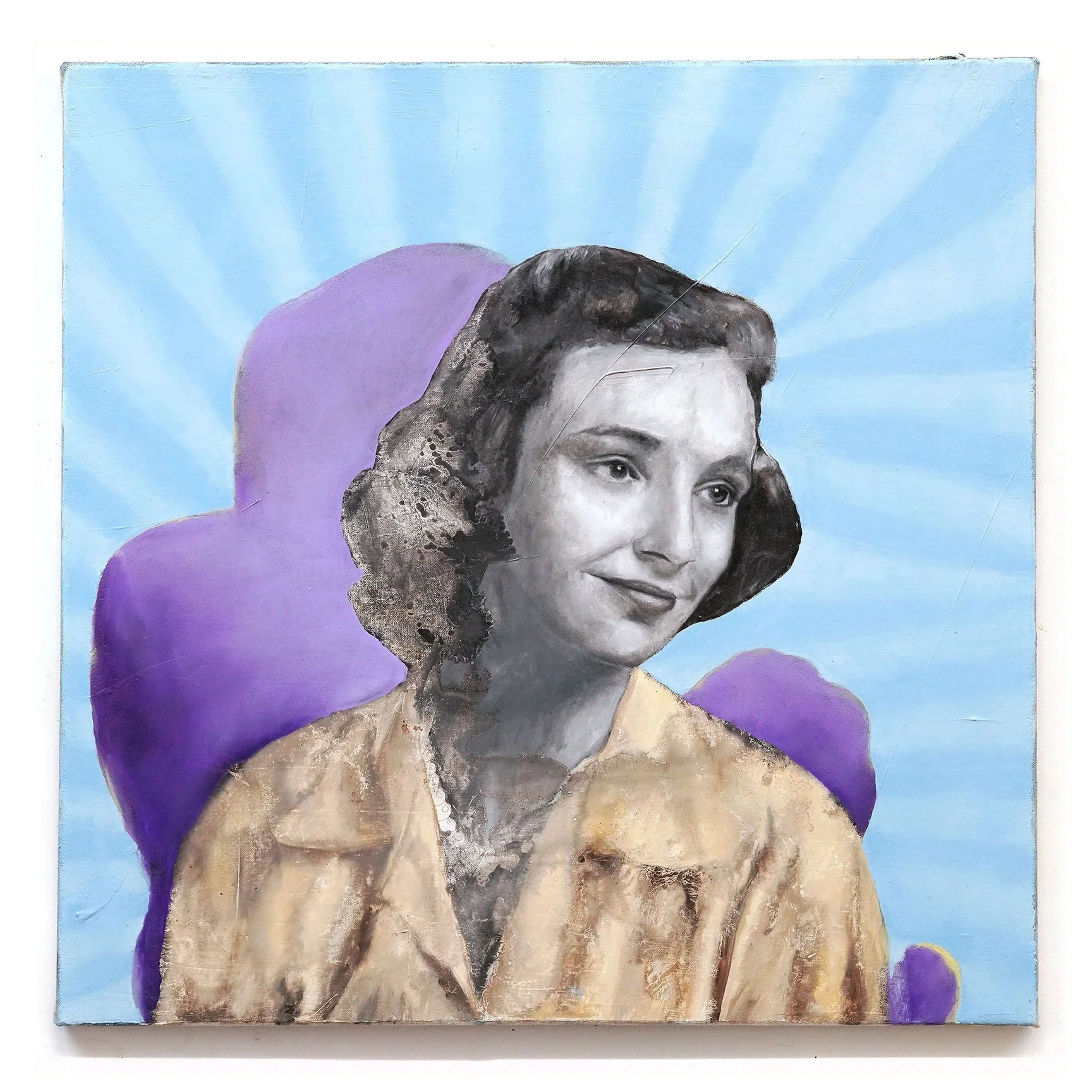
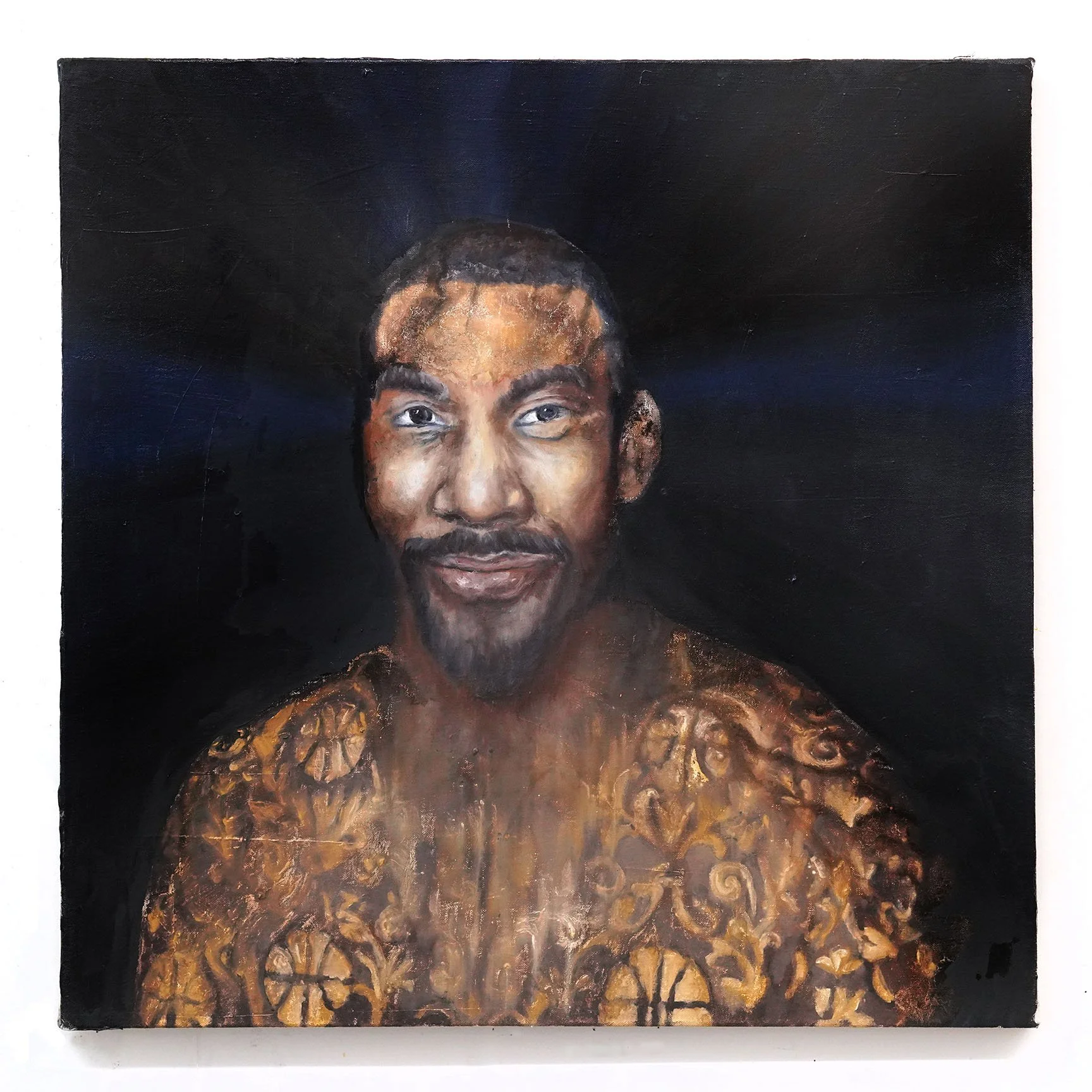
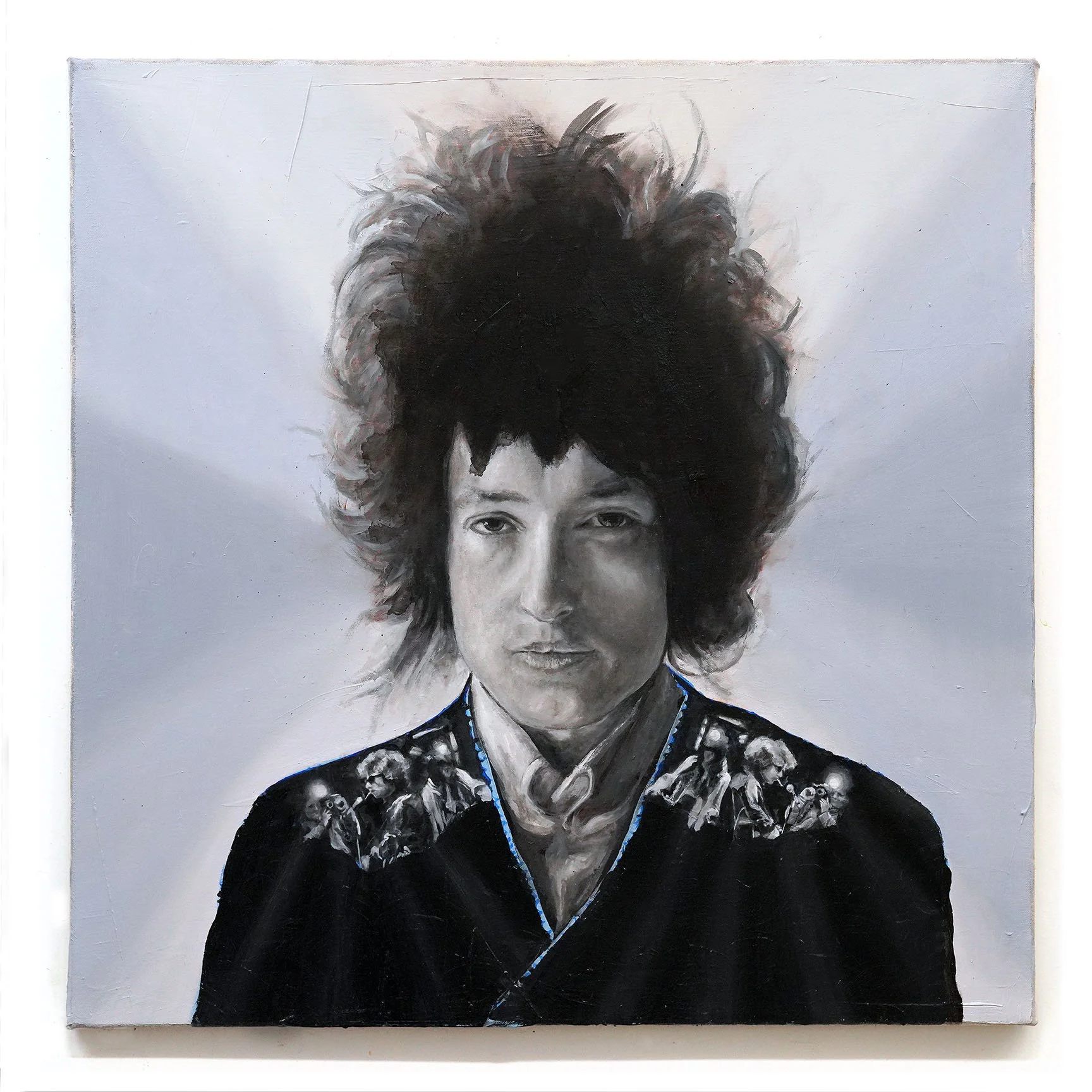
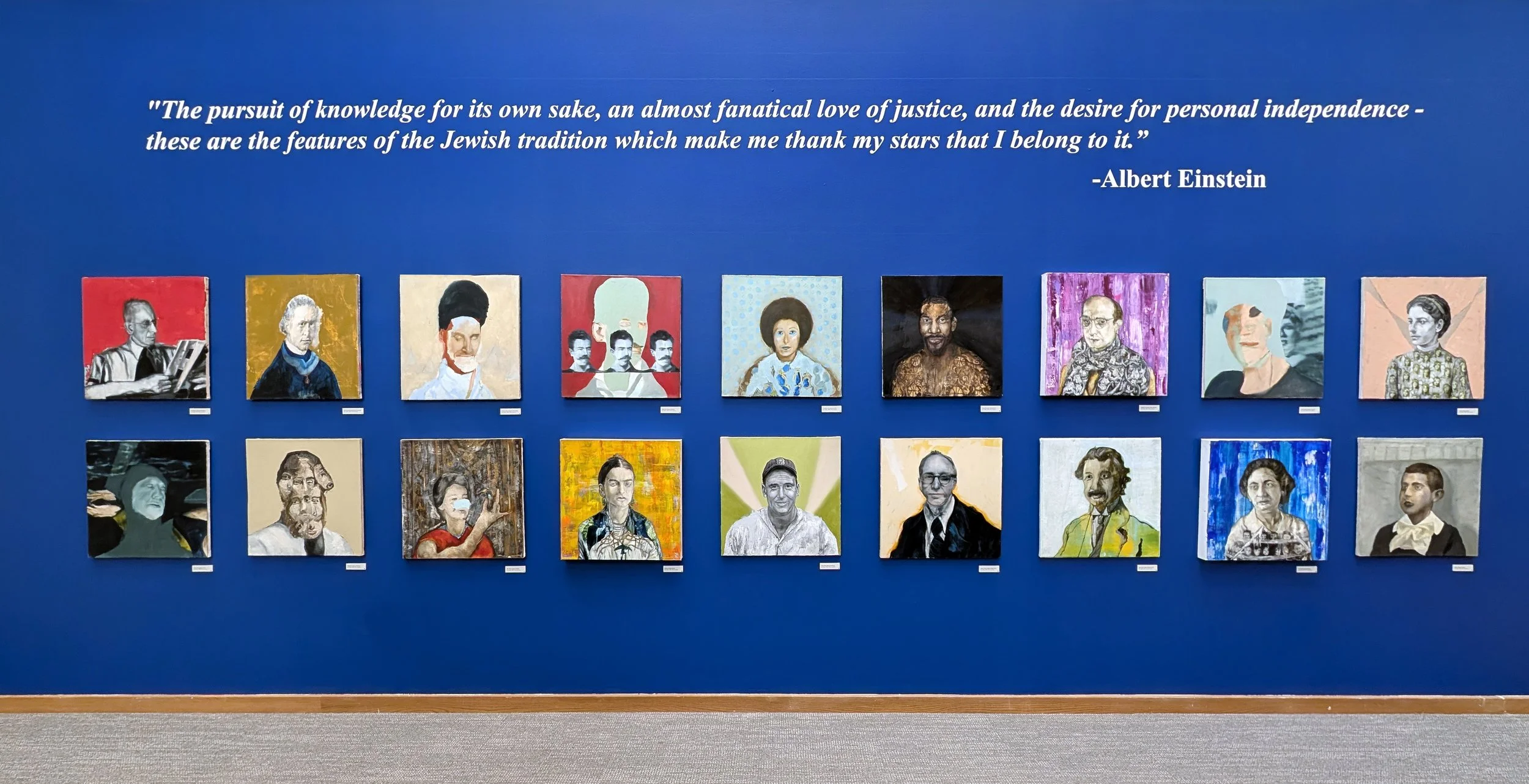
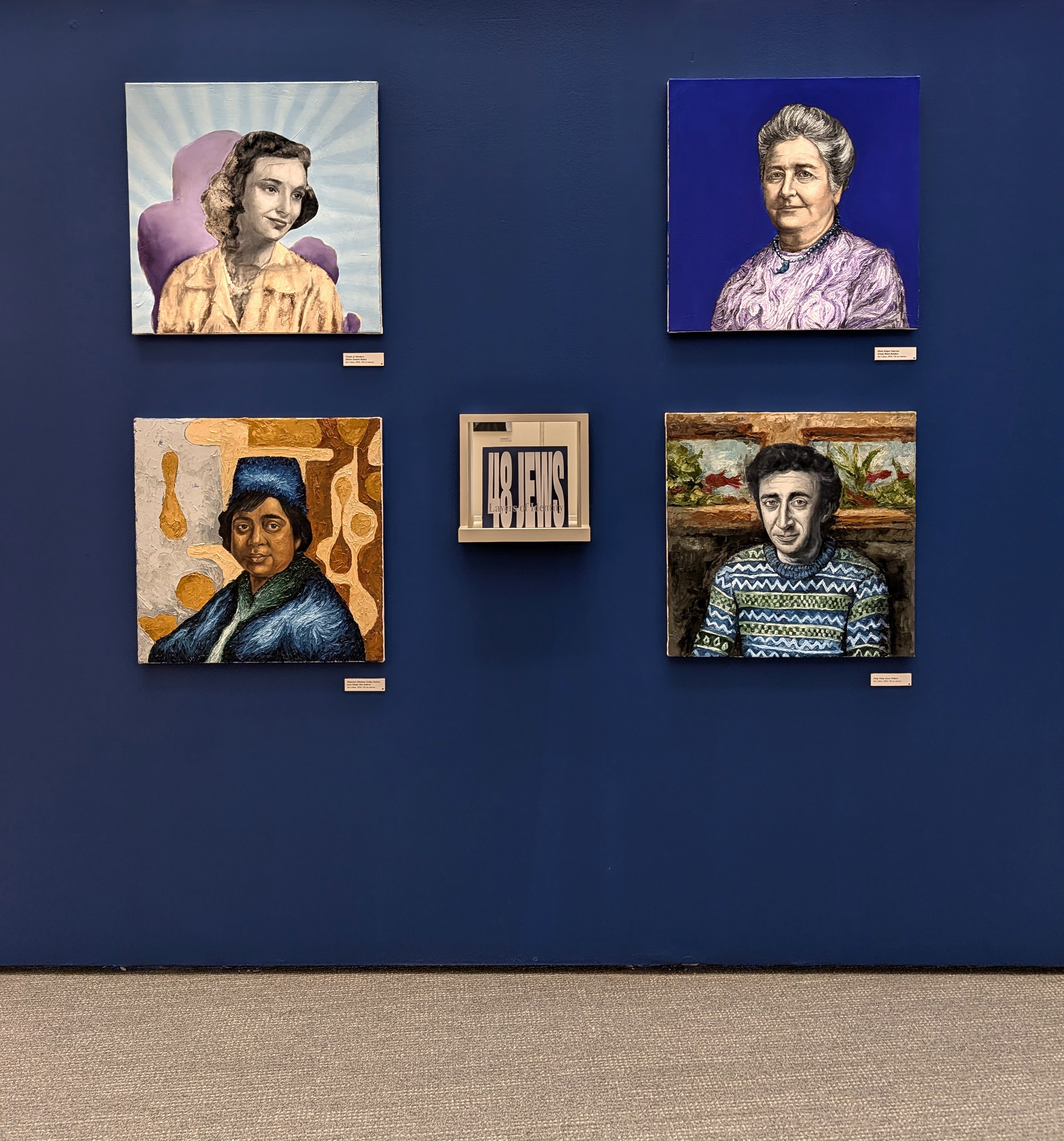
At one level the paintings examine Jewish history and culture through portraits of well known figures such as Anne Frank, Elie Wiesel, Hannah Arendt, Marc Chagall, and Golda Meir. At another level the series raises more complicated questions about inclusion and belonging. Figures such as Elvis Presley, who has several generations of maternal Jewish ancestry, or Frida Kahlo, who claimed Jewish heritage despite historical debate, complicate traditional definitions of Jewishness.
The project does not attempt to resolve these questions. Instead, it exposes how fluid and negotiated identity can be.
Portraiture becomes the vehicle for this exploration. Traditionally, portraits promise recognition. They suggest that an image can capture the essence of a person. Lahav’s paintings challenge that assumption. A painting is never a person. It is a surface, a gesture, a moment in time. The subject it references is always more complex and constantly changing.
In the 48 Jews series, Lahav intentionally destabilizes the portrait format. Some paintings remain relatively recognizable, while others blur, distort, or dissolve into abstraction. Styles shift dramatically from one canvas to another. Some works approach photorealism. Others reference Richter’s blurred photographic paintings. Still others explode into loose painterly gestures. This stylistic instability reflects the instability of identity itself.
The exhibition at the Jewish Museum Milwaukee expands these ideas through three interconnected themes.
The first is the nature of portraiture and painting. Lahav is interested in how far an image can move away from its source while still remaining recognizable. A portrait attempts to hold identity still, yet identity itself is always shifting. These paintings explore the limits of representation and the tension between image and person.
The second theme is biography. Each figure in the series carries a complex life story, yet cultural memory tends to reduce historical figures to simplified narratives. A single photograph or anecdote often becomes the defining representation of a life. Lahav’s paintings disrupt that simplification by reinterpreting these images through multiple stylistic approaches.
A central example of this exploration is the figure of Anne Frank.
Anne Frank is one of the most recognizable figures in modern history. Her photograph appears in textbooks, museums, and memorials across the world. Even a simplified silhouette of her face and hair can trigger immediate recognition. Over time, Anne Frank has become a global icon.
Yet Anne Frank was also an author.
Her diary, The Diary of a Young Girl, is one of the most widely taught texts about the Holocaust. What is less widely understood is that the diary itself exists in several versions. Anne originally wrote the diary privately, recording her thoughts, fears, and reflections as a teenager in hiding. Later, after hearing that wartime diaries might be preserved and published, she revised portions of her writing herself. After her death, her father edited the manuscript again, removing passages related to her emerging sexuality and conflicts with her family in order to align with the cultural expectations of the time. The text was then translated and retranslated into numerous languages, each version introducing subtle shifts in tone and emphasis.
Even Anne Frank’s voice exists through layers of editing and mediation.
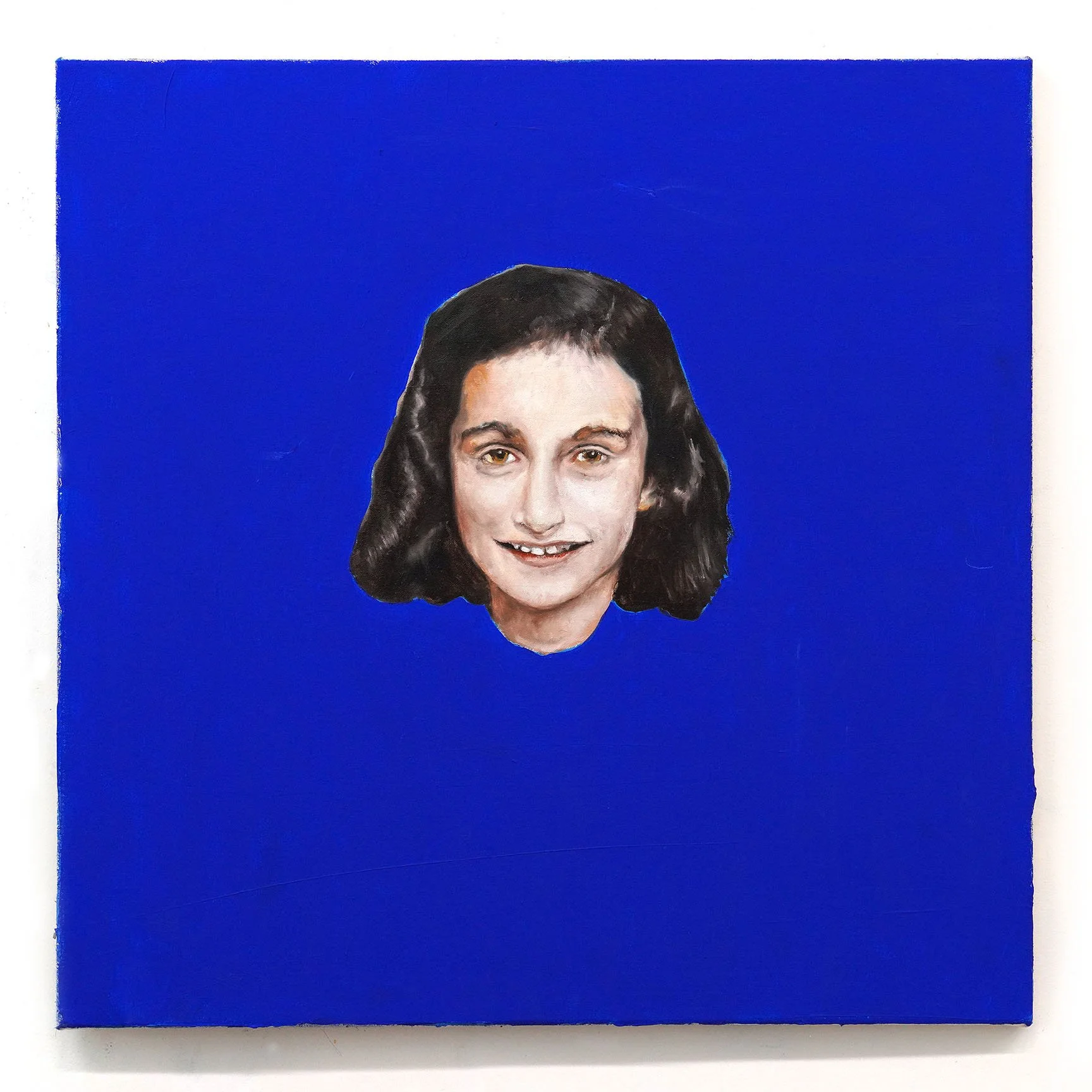
Lahav’s response to this complexity is the series Eighteen Annes, a group of eighteen paintings based on the familiar photograph of Anne Frank. The number eighteen references chai, the Hebrew word for life. Each painting begins with the same source image but transforms it through variations in paint, gesture, and abstraction. Some images remain recognizable, while others dissolve into loose painterly forms. Through repetition, the work reveals how identity shifts through interpretation and representation.
No single image becomes the definitive Anne Frank.
The third theme of the exhibition addresses the diversity of Jewish experience.
In American culture, Jewish identity is often simplified into a narrow narrative centered on European Ashkenazi history. In reality, Jewish communities have existed across North Africa, the Middle East, Ethiopia, Iran, India, and many other regions. Lahav’s own family reflects this complexity, with Polish Ashkenazi roots on one side and Mizrahi Jewish heritage from Baghdad and Iran on the other.
This global diversity is often flattened within mainstream cultural narratives.
By presenting a wide range of Jewish figures and histories, the exhibition invites viewers to reconsider the assumptions they bring to the idea of Jewish identity. The series does not attempt to define Jewishness. Instead, it expands the conversation.
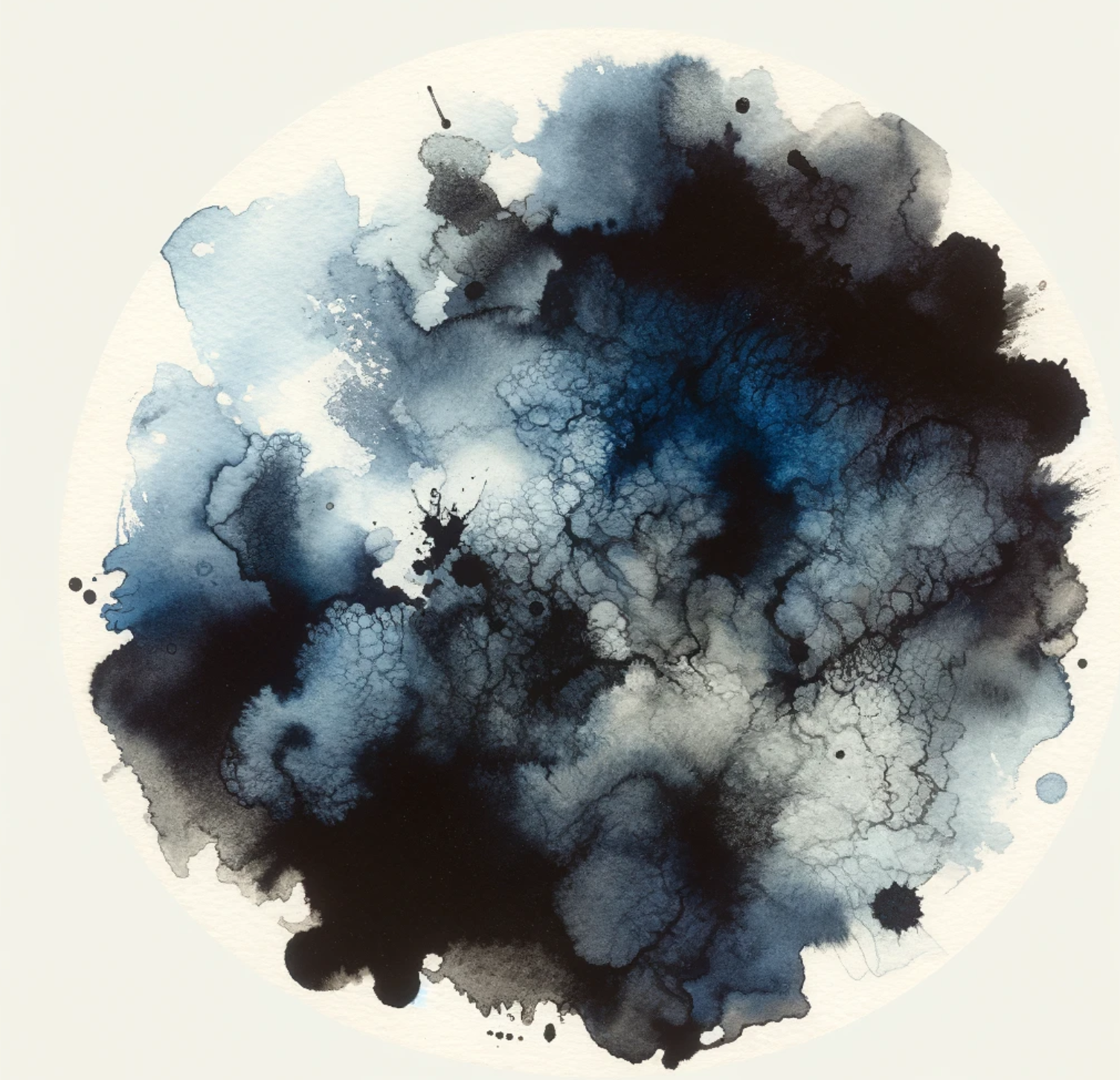
Another layer of the project examines the role of technology in shaping identity. When Lahav first began 48 Jews, internet search engines were already influencing how people accessed knowledge. Today, algorithm driven systems and artificial intelligence further shape cultural narratives. In recent works, Lahav explores this phenomenon directly, documenting searches for Jewish identity and diversity and asking AI systems to summarize them. The results reveal how easily complex histories become simplified through digital systems.
The exhibition ultimately brings these threads together.
48 Jews began with a simple question and an internet search. Nearly two decades later, the questions it raises about identity, representation, and cultural memory remain unresolved. Lahav’s paintings do not offer definitive answers. Instead, they create space for viewers to reconsider how identity is constructed, mediated, and remembered.
Painting, in this context, becomes a way of slowing down recognition and reopening conversations that might otherwise remain closed.
SELECTION OF NEW WORKS NEW TO THIS ITERATION